
Liv's Health Journey
From uncontrollable symptoms to a life built with intention not fear.
I Never Felt Like a “Normal” Kid
Growing up, chronic illness was part of my life long before I knew what was happening in my body. It pulled me away from school, friends, and the thing I loved most, soccer.
Doctor visits, ER trips, tests, and unanswered questions became my everyday reality.
It was a lot for a little kid — physically, emotionally, mentally.
The Stomach Pain That Started Everything
Christmas Day at age 5, I spent in the ER, doubled over in pain, asking my parents if Santa would still know where to find me.
There were GI tests no kid should have to go through, adult doses of Prevacid, and the removal of almost every major food allergen from my diet.
And yet?
My pediatrician said it was “just anxiety.”
My parents knew better.
Elementary School:
The Symptoms Piled Up

Migraines.
Light sensitivity.
Dizziness.
Throat tightness.
Leg pain after soccer.
Low blood sugar.
Inability to gain weight.
Constant viruses and strep throat.
I missed weeks of school at a time.
Any time I got sick, I crashed — hard — and took forever to recover.
At this point I had been gluten free, dairy-free, preservative and dye-free, and on an overall clean diet since 5 years old. Any time I accidentally ate gluten, I was on the floor screaming in pain.
It was clear I had celiac disease, but that was only a sliver of my health story.
Doctors kept passing me off to specialists or saying things like:
"Maybe she needs to quit soccer."
"Maybe she should homeschool."
No one thought about how their words would affect a child.
Those comments stuck with me for years.
I ended up missing the last 6 weeks of 6th grade, unable to get out of bed due to debilitating migraines, dizziness, inability to eat, and overall weakness.
I’m not sure how I passed that grade.
A Brief Break… Then New Symptoms
Late middle school and early high school brought a little relief thanks to a functional medicine doctor and supplements based on my genetic testing.
But then the symptoms crept back —
and new ones started.
11th grade: I collapsed in the hallway, pulling an entire floating shelf down with me.
ER doc said “dehydration.”
My mom wasn’t buying it.
Senior year, during COVID:
I was studying at a high-top table when my parents heard a crash and found me on the floor shaking. A trusted doctor friend told us:
“That sounds like a POTS episode.”
More episodes followed.
Doctors doubted whether I’d be able to go away to college — or play soccer at all.

Fighting for Soccer — and for
TheLife I wanted
I used everything I had — calming practices, supplements, lifestyle adjustments, strict routines — to keep my symptoms stable enough to play.
I played two seasons of college soccer before my torn hip labrum ended that part of my journey.
At the time, I didn’t understand that my hip issues were related to the connective tissue disorder affecting my whole body.

Then Came the Seizures
The summer before junior year in college, something new began.
Seizure-like episodes that lasted 20–45 minutes, leaving me unconscious and shaking.
Terrifying for me, terrifying for my parents, and happening up to 3 times a day.
A doctor friend recognized it immediately:
“This is PNES — a functional neurological disorder.”
I went to Mayo for an EEG to rule out epilepsy.
I found one of only two PNES specialists in the state and learned to manage the episodes.
It helped, but didn’t stop everything.
And deep down, I still sensed something physical was being missed.
The Search for Answers (Again)
I graduated college in three years but was still struggling:
- severe stomach pain and unable to eat much
- major fatigue
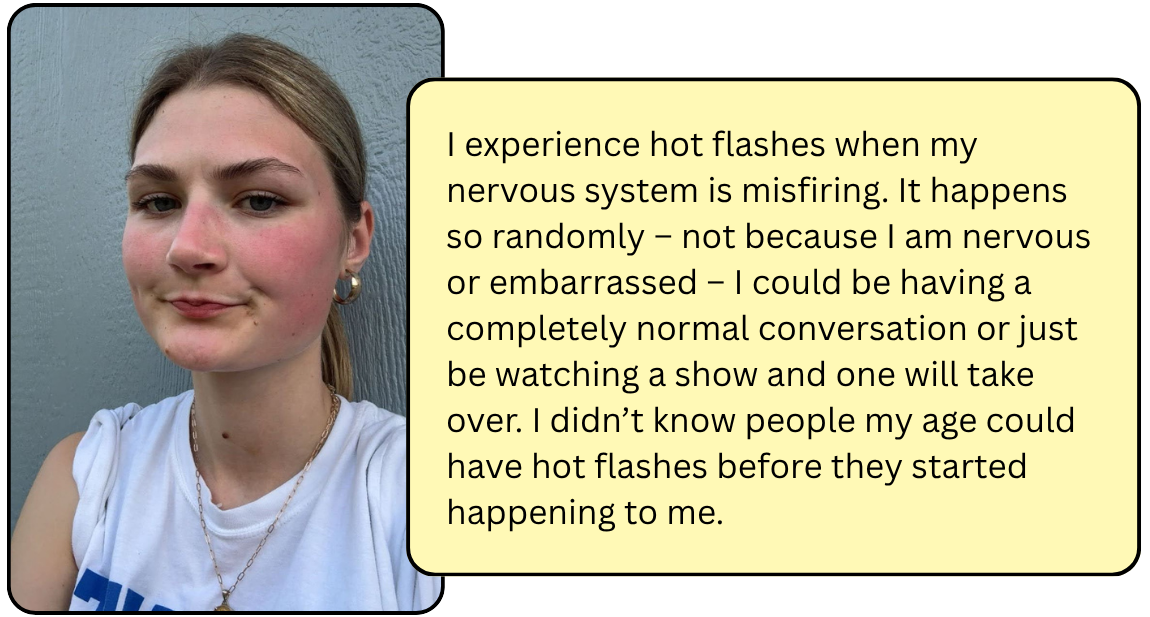
- a dysregulated nervous system (hot flashes, dizziness, headaches)
- unpredictable episodes
I had been everywhere by this point - Mayo, Cleveland Clinic, Children’s in Minneapolis, etc and still had no answers.
My parents decided to bring me to a top functional medicine doctor on the East Coast.
He ran every test imaginable and finally gave me answers:
- Crohn’s Disease/Severe intestinal inflammation
- Hypermobile Spectrum Disorder (HSD) as the umbrella diagnosis
He also believed I still had POTS, but salt and compression had never helped me.
Over time, it became clear that persistent tachycardia was a major driver of my symptoms, and I eventually found heart rate-regulating medications that helped bring my system back into a more stable range.
This doctor visit was a turning point and, for the first time, things finally began to make sense.
Where I Am Now
Am I symptom-free?
No.
Is there a cure for HSD?
No.
But I have something as powerful as a cure:
the tools and strategies that allow me to keep living my life, even with chronic illness.
Long before I had diagnoses, I wasn't recklessly pushing through. I was learning how to respond to what my body needed.


Over time, I learned how to:
-
pace my body
-
regulate my nervous system
-
support my digestion
-
adapt my movement
-
manage spikes and crashes
-
build the mindset of a FIGHTER
I still have ups and downs. But I don’t let the downs derail my life anymore. I’ve learned how to meet them with calm instead of panic and keep moving forward even when healing isn’t a straight path.
And that’s what I help others do now.

MY DIAGNOSES
(For context, not a prerequisite for healing. You don’t need a diagnosis to make progress)
HSD (Hypermobile Spectrum Disorder)
HSD is a condition where a person’s connective tissue is looser or stretchier than it should be. And because connective tissue is everywhere — joints, skin, organs, and ligaments — it can affect multiple organ systems.
People may experience joint pain or instability, muscle tension and fatigue, digestive issues, autonomic nervous system dysfunction, and much more, depending on which areas are most affected.
Supporting the body with physical therapy, strength training, nervous-system work, and lifestyle tools can help stabilize the joints, reduce symptoms, and make daily life feel more manageable.
A simple way to think about it:
HSD means the body’s “structural support system” is extra flexible, so it needs extra stability, strength, and nervous-system support to feel steady and strong.
PNES (Psychogenic Non-Epileptic Seizures)
PNES are real, involuntary episodes that happen when the brain’s stress-response system becomes overwhelmed. They can involve seizure-like events as well as dizzy spells, strange auras, waves of weakness, or brief dissociative moments when the nervous system hits its limit.
Even though “psychogenic” sounds emotional, the system can be overloaded by physical illness, chronic pain, dysautonomia, fatigue, sensory overload, or emotional stress — anything that pushes the brain past what it can manage. Because underlying medical issues can keep the nervous system on high alert, it’s important to identify and treat anything adding extra strain.
A simple way to think about it:
PNES are the brain’s overload response — and when you support the nervous system and address the underlying stressors, episodes often become less frequent, less intense, and sometimes preventable altogether.
Dysautonomia (Autonomic Dysfunction)
POTS with persistent tachycardia features
Your body’s “automatic settings” aren’t running smoothly. The autonomic nervous system controls everything your body does without you thinking about it — heart rate, blood pressure, digestion, temperature, breathing, and sweating.
When this system gets out of sync, your body can feel “off-balance,” leading to symptoms like dizziness, rapid heart rate, low blood pressure, stomach issues, feeling shaky or faint, trouble regulating temperature, and fatigue.
A simple way to think about it:
It’s your body’s autopilot glitching, making basic functions harder than they should be. In my case, this shows up as POTS with persistent tachycardia that requires targeted regulation and support. With the right tools, it can become more balanced and resilient.
Crohn’s Disease & Gut Dysmotility
Crohn’s is an inflammatory bowel disease where the immune system causes inflammation in the digestive tract, leading to pain, cramping, diarrhea, and nutrient issues. I never had diarrhea, which made this extra hard to diagnose.
Alongside Crohn’s, gut dysmotility can cause the GI tract to move too slowly, too quickly, or inconsistently, often due to nervous-system dysregulation, stress, dysautonomia, or connective tissue conditions like HSD.
Together, these can lead to symptoms like bloating, nausea, constipation or diarrhea, pain, early fullness, and unpredictable digestion.
A simple way to think about it:
Crohn’s causes inflammation, and dysmotility creates a gut–brain-axis communication issue — so supporting both the gut and the nervous system helps digestion feel steadier and more predictable.
Celiac Disease, NCGS & Food Sensitivities
Celiac disease is an autoimmune condition where eating gluten triggers inflammation and damage in the small intestine, leading to pain, bloating, nutrient issues, and systemic symptoms.
Non-Celiac Gluten Sensitivity (NCGS) causes similar symptoms without intestinal damage, when the body reacts to gluten through the immune system or gut–brain axis.
Other food sensitivities or allergies (like dairy, soy, or additives) can also trigger bloating, nausea, pain, headaches, rashes, or fatigue, depending on how the body responds.
A simple way to think about it:
Celiac causes autoimmune inflammation, while NCGS and other food sensitivities create immune or gut–brain-axis reactions — so supporting the gut, avoiding triggers, and calming the nervous system helps symptoms improve.
Anxiety
Anxiety isn’t “just worrying too much”. It’s a physiological and neurological state where the brain and nervous system stay stuck in alert mode. This can happen for many reasons, including chronic illness, nervous-system dysregulation, past medical trauma, unpredictable symptoms, or simply living in a body that doesn’t feel stable or safe.
Anxiety often goes hand-in-hand with chronic illness because the body and nervous system are constantly managing symptoms, stress, and triggers. When the body is overloaded, the mind feels overloaded — and the opposite is true too.
When anxiety is present, your body may feel on-edge, overwhelmed, shaky, tight, dizzy, nauseous, or “revved up” for no clear reason. Thoughts can spiral, symptoms can intensify, and daily tasks may feel harder because the brain is scanning for possible threats or trying to manage too much stimulation at once.
A simple way to think about it:
Anxiety is what happens when the brain and body get stuck in “alert mode,” even when you’re not in danger. When you support the nervous system, build coping tools, and understand what your body is reacting to, anxiety becomes far more manageable — and life starts to feel calmer, safer, and more predictable again.