
The Reality of an Invisible Illness: Living with Rheumatoid Arthritis Since Age 3
One of the hardest parts of living with an invisible illness is knowing how much can be happening beneath the surface while the people around you have no idea.
You can be in pain and still look completely fine.
You can make it to work, school, church, dinner with friends, or a family event without anyone knowing how much it took to get there - or what it might cost your body afterward.
And sometimes, when people can't see what you're going through, it can be hard to feel fully understood.
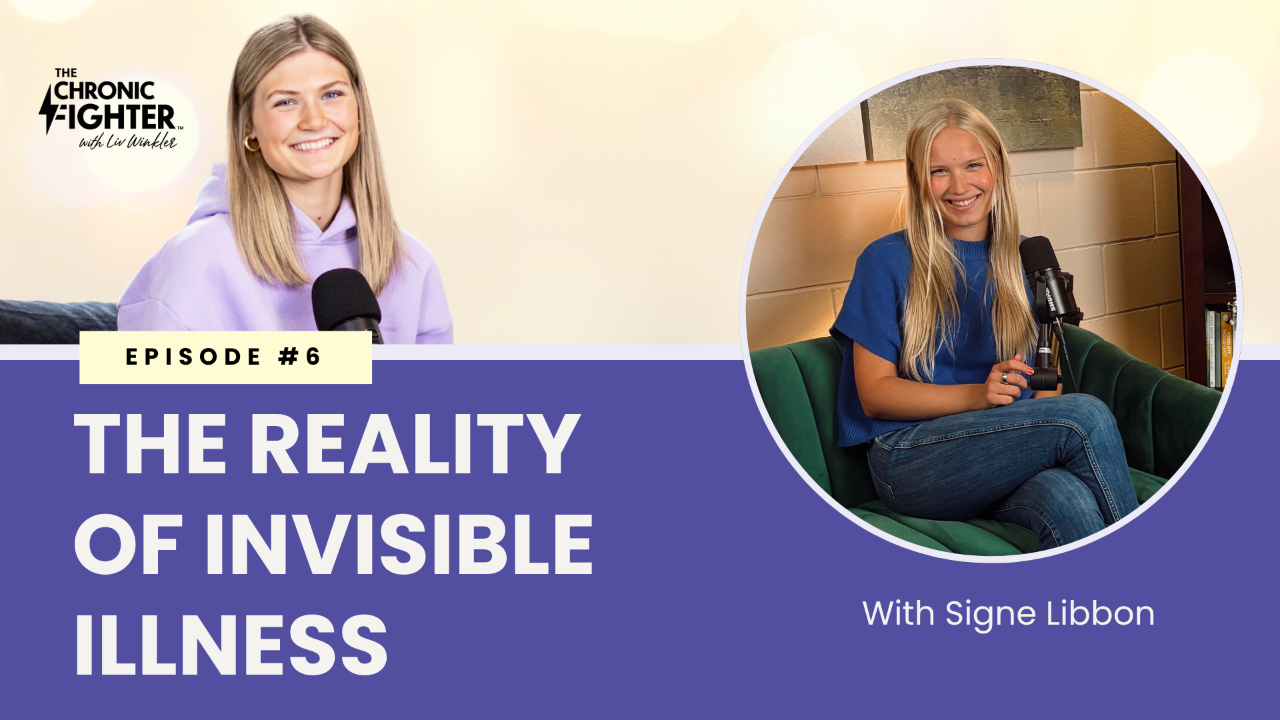
In Episode 6 of The Chronic Fighter Podcast, I sat down with my friend Signe Libbon, who was diagnosed with juvenile rheumatoid arthritis when she was just three years old.
Signe has spent more than two decades learning how to live with chronic pain, unpredictable flares, medications, surgeries, and limitations that other people often can't see. But our conversation wasn't only about rheumatoid arthritis.
We talked about what it feels like to grow up knowing your body works differently than everyone else's. We talked about grief and gratitude, friendships, relationships, faith, and the fear that sharing the hard parts of chronic illness might make you "too much" for the people you love.
And we talked about what can happen when you finally let people in.
When Your Pain Isn't Visible
During our conversation, Signe shared a story from college that I think explains invisible illness so well.
She was experiencing a significant RA flare that caused inflammation and a cyst in her ankle. Eventually, she received a steroid injection and had to wear a boot.
Once she had the boot on, people started noticing.
They stopped her in the hallway and asked what had happened and whether she was okay.
But what struck Signe was that a couple of weeks earlier, she had actually been in significantly more pain. She just didn't have anything visible showing it. She had been walking around campus hurting, and no one knew.
I could relate to that so much.
There have been plenty of times when I've looked completely fine while dealing with symptoms that no one around me could see. And when you're good at putting on a smile or continuing with your day, people may assume you're doing much better than you actually are.
That's one of the complicated things about invisible illness. People usually understand what they can see. A cast. A boot. Crutches. A hospital bed.
But pain, fatigue, nausea, dizziness, inflammation, or everything happening inside your body doesn't always come with something visible that tells the world, "I'm struggling today."
Signe said something during our conversation that really stood out to me: as humans, we want to feel seen, heard, and understood. Invisible illness can create barriers to all three.
And that can feel incredibly isolating.
Letting People In
Both Signe and I spent years keeping a lot of our health struggles private.
For Signe, that was especially true in high school. She described feeling like her rheumatoid arthritis was almost a secret she carried around - something she eventually had to "reveal" to people.
I understood exactly what she meant.
Growing up, I didn't want my health to be the thing people knew me for. I wanted to be Liv - the friend, the soccer player, the normal kid.
But there's a downside to hiding such a big part of your life.
People can't support you through something they don't know you're going through.
Signe talked about how much changed when she became more open in college. Her friends could see when she was struggling, and she began communicating more honestly about what she needed.
One friend even watched YouTube videos so she could learn how to give Signe a medication that made her sick. Another made her a basket of prizes so she could open something after taking that medication - something Signe's mom had done for her when she was younger.
Those are such simple but meaningful examples of what can happen when we give people the opportunity to show up for us.
Opening up about chronic illness doesn't mean you have to tell everyone everything.
But I've learned that allowing the right people into the parts of your life that are hard can make your relationships so much more authentic.
You don't have to pretend you're okay in order to be loved.
Grieving What Chronic Illness Changes
Signe was diagnosed so young that rheumatoid arthritis affected parts of childhood most kids never have to think twice about.
She couldn't participate in gym class or sports the way other kids could. At recess, she even had an adult helping make sure she didn't overdo it because protecting her joints was important for her long-term health. That didn't mean she didn't want to run around with everyone else.
She did. And she had to grieve that.
I loved the way Signe described how her parents handled those years. They gave her compassion and empathy without making her feel like a victim. They allowed her to be sad about the things she couldn't do while also helping her find the things she could.
Instead of sports, she found other things she enjoyed, including sewing, plays, and speech. She later found ways to stay connected to sports too, including managing football in college.
One of my favorite stories she shared was about track and field day. Signe couldn't run the mile with the other kids, so her mom brought her scooter to school and cheered while Signe scootered the mile instead. She still got to be there and participate. It just looked different.
That led us into a conversation about something I think is so important with chronic illness: the relationship between grief and gratitude.
There are things chronic illness takes away or changes. It's okay to grieve those things. You don't have to pretend they don't hurt. But you also don't have to stay in that grief forever.
Sometimes the question becomes: What can I do? Maybe it doesn't look the way you pictured. That doesn't mean it can't still be meaningful.
Learning to Work With Your Body
Another thing Signe and I talked about was learning your body's limits.
When Signe feels a flare coming, she has learned that resting more and not pushing herself can help. Standing for long periods of time is especially difficult because her arthritis currently affects her ankles and feet.
And sometimes the effects of an activity don't show up until later. She told me about going to a wedding with her husband and dancing all night. She had an amazing time - but the next morning, she needed his help just to get around their apartment.
I understand that tradeoff.
There are things I absolutely still want to do, but I've learned that sometimes I need to prepare for them differently. I may need to rest beforehand, pace myself while I'm there, or give myself time afterward to recover.
Listening to your body doesn't mean you're giving up.
Signe said something I loved during this part of our conversation. She used to worry that recognizing her limitations would hold her back from reaching her goals. Over time, she realized that recognizing those limitations can actually help her reach them.
I think that's such an important thing to remember. Your limitations don't determine what you're capable of. Sometimes they just change how you get there.
The Fear of Being "Too Much"
One of the parts of our conversation I think a lot of people with chronic illness will relate to was our discussion about relationships.
When Signe first started dating her now-husband, Drew, she worried about how much she should tell him about her daily pain. She didn't want to bring him down.
I've had that same fear. When you live with chronic illness, there can be this voice in the back of your mind asking:
What if this is too much for someone else?
What if they're tired of hearing about how I feel?
What if my health becomes a burden to them?
But Drew didn't see Signe's rheumatoid arthritis as something he needed to look past. He told her that he loved her more because of it - because he saw how living with RA had built strength and resilience in her.
Even on their first date, when Signe had to tell him she was experiencing an RA flare, his reaction surprised her. Instead of being scared away by this part of her life, he saw more of who she was because of it.
As they continued dating, they found a simple way to communicate. Drew would ask her in the morning which joints were hurting and how he could support her that day. He didn't need her to hide it and he wanted to understand.
I think that's such an important reminder for anyone with chronic illness who has ever worried that they're "too much." The right people aren't going to require you to hide the difficult parts of yourself in order to stay in your life. They'll want to know you. And that includes the parts of your story that are hard.
Finding Strength in the Parts of Your Story You Didn't Choose
For a long time, both Signe and I saw our health struggles as something that made us different.
But Signe talked about how her perspective began to change when she let people into her life. The people who loved her reflected something back to her that she hadn't always been able to see herself. They saw resilience, strength, and someone who had been through difficult things and kept going.
That doesn't mean chronic illness is easy or that you have to be grateful for everything you've experienced. But something difficult can still shape parts of you that you're proud of.
Toward the end of our conversation, I asked Signe what she would tell the little girl who was first beginning her life with rheumatoid arthritis. She said she would tell her that it would become a source of strength and build resilience in her.
I love that. Because sometimes the parts of ourselves we spend years wishing were different become the same parts that teach us how strong we really are.
Faith in the Middle of Chronic Illness
Faith has also been an important part of Signe's story.
One of the most powerful stories she shared happened during high school, during a time when she was feeling especially alone in her experience with RA.
Signe had been praying that God would show her she wasn't alone. Then one day, she was called to the school nurse's office. A woman with rheumatoid arthritis had recently passed away and had left behind a letter, jewelry, and a gift specifically for a girl in Signe's community who was also living with RA. Signe eventually met the woman's husband and heard about what her life had been like living with rheumatoid arthritis from a young age.
For Signe, it felt like an answer to the exact thing she had been praying about. She felt seen, she felt heard, and she felt reminded that she wasn't alone.
Later in our conversation, Signe talked about the hope her faith gives her even when her circumstances are hard. I shared how much my own faith has changed the way I carry the difficult parts of my health too.
There have been times when everything felt like too much for me to carry by myself. Eventually, I had to realize that I wasn't supposed to.
For both of us, faith doesn't make the pain or uncertainty disappear. But it reminds us that we don't have to walk through it alone.
Your Illness Can Be Part of Your Story Without Defining It
Signe has lived with rheumatoid arthritis for most of her life. It has affected her childhood, her activities, her relationships, her body, and countless everyday decisions. But listening to her story, I don't think you come away only thinking about everything RA has taken from her.
You see the people who have loved her.
The friends who learned how to help.
The parents who encouraged her to grieve and then find another way forward.
The husband who saw strength where she once feared he might see a burden.
The faith that has reminded her she isn't alone.
And the resilience she has built through more than two decades of living with something she never chose.
Chronic illness can change your life. It can require you to grieve and it can force you to adapt. And it can make you feel different from everyone around you. But different doesn't mean less capable and needing support doesn't make you a burden.
Letting people see the hard parts doesn't make you weak. Sometimes letting yourself be fully seen is exactly what reminds you that you were never meant to carry all of this alone.
Frequently Asked Questions About Invisible Illness and Chronic Illness
What does it mean to have an invisible illness?
An invisible illness is a health condition that can significantly affect someone's life without being obvious to the people around them. Someone may be experiencing pain, fatigue, inflammation, dizziness, or other symptoms while looking completely healthy on the outside. That's why it's important to remember that you can't always tell what someone is going through just by looking at them.
Why can it be hard to talk about an illness other people can't see?
It can be hard to explain something that other people can't see or fully understand. You may worry that people won't believe you, that you'll be treated differently, or that your illness will become the main thing people see when they look at you. But keeping everything hidden can also feel isolating. You don't have to share everything with everyone, but opening up to people you trust can give them the chance to better understand what you're going through.
How do you find gratitude when chronic illness has taken so much from you?
It's important to give yourself permission to grieve the things chronic illness has changed or taken away. Signe shared how her parents gave her space to be sad about the things she couldn't do, but they also didn't want her to stay stuck there. They helped her start looking at what she still could do and find new things that brought her joy. Ignoring those losses isn't healthy, but neither is letting them become the only thing you see. Finding ways to appreciate what is still possible can help you move forward with more gratitude for the life you have.
How do you talk to a partner about chronic pain or chronic illness?
There isn't one right way to do it, but honest communication can help your partner understand what you're experiencing and how they can support you. Signe and Drew found that simple daily check-ins worked well for them. Instead of expecting him to know when she was hurting or what she needed, they created a way for her to communicate it. The goal isn't for your partner to fix everything. It's to give them a chance to understand what you're going through and be there for you.
How can you find strength in something you never wanted to go through?
Finding strength in what you've been through doesn't mean you have to be thankful that it happened. Sometimes it means looking back and recognizing the ways you've grown because you've had to keep going through things you never would have chosen. You may see resilience, empathy, courage, faith, or a different perspective on life that you didn't recognize in yourself before.
How can faith help when you're living with chronic illness?
Faith doesn't necessarily take away the pain, uncertainty, or hard days that come with chronic illness. But it can be a source of hope and a reminder that you don't have to carry everything on your own. For Signe and me, faith has helped us feel less alone in some of the hardest seasons of our lives and given us something bigger than our circumstances to hold onto.
And if this conversation resonates with you, subscribe to The Chronic Fighter for honest conversations, practical strategies, and stories about navigating chronic illness while continuing to build a life that feels meaningful to you.
Feel Free to Reach Out
Questions about the membership, the podcast, collaborations, or something else?
We would love to hear from you.
Use the form below and we’ll get back to you as soon as we can.
We hate SPAM. We will never sell your information, for any reason.
