Raising a Child with Chronic Illness: What Every Parent Needs to Know (Lessons From Our Family's 23-Year Journey)
If you're raising a child with chronic illness, you already know that the hardest part often isn't the diagnosis.
It's the uncertainty. The unanswered questions. The appointments that lead nowhere. The feeling that no one truly understands what your child is experiencing.
Our family lived this reality for more than two decades.
Before diagnoses like Crohn's disease, POTS, hypermobility, nervous system dysfunction, and PNES finally explained what was happening, there were years of being told it was "just anxiety," years of advocating, and years of wondering if we'd ever get answers.
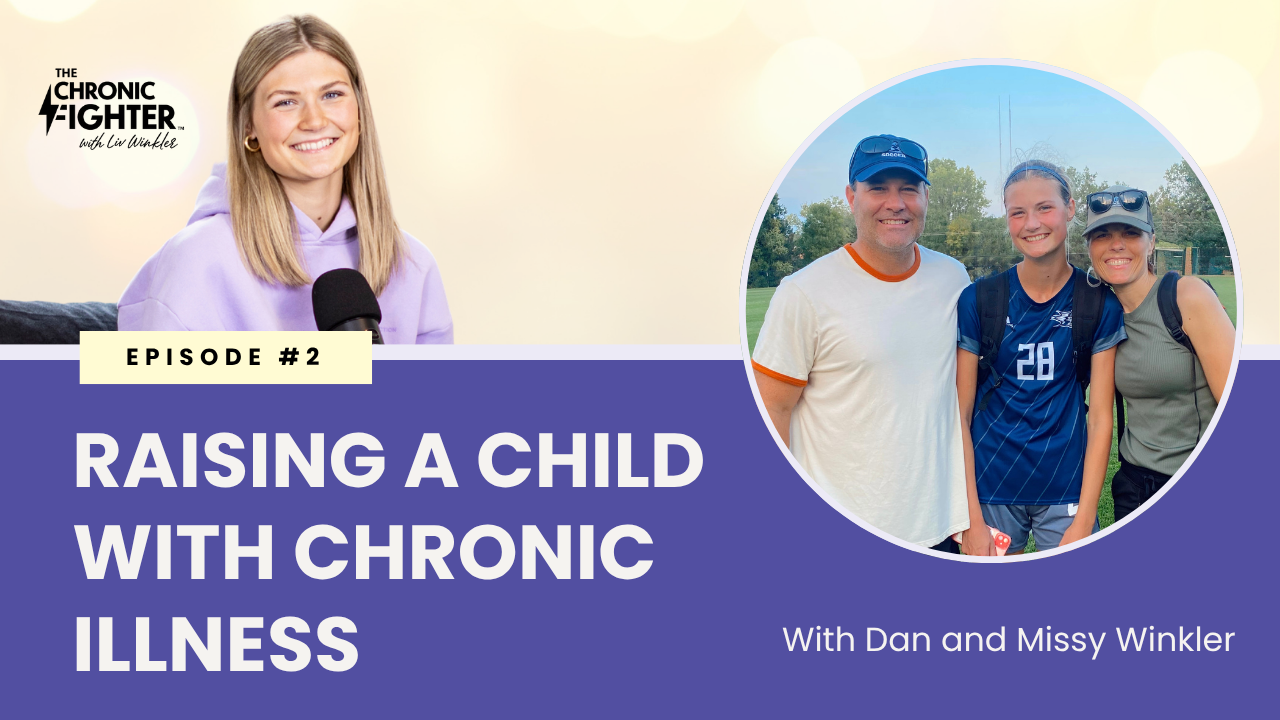
In Episode 2 of The Chronic Fighter Podcast, Liv sits down with her parents to share not only what happened, but what they wish every parent navigating chronic illness knew much earlier.
Whether your child has a diagnosis or you're still searching for answers, these lessons may help you feel a little less alone.
If you've ever caught yourself waiting for "someday," you're not alone.
Why Raising a Child With Chronic Illness Is So Different
Parenting always comes with uncertainty.
Parenting a child with chronic illness comes with uncertainty every single day.
Unlike an illness with a clear beginning and end, chronic conditions often involve fluctuating symptoms, unpredictable flares, and treatments that evolve over time.
Parents become much more than caregivers.
You become:
- A medical advocate
- A researcher
- A scheduler
- An insurance expert
- A care coordinator
- Your child's emotional safe place
Many parents describe it as having a second full-time job that no one prepared them for.
And because many chronic illnesses are invisible, others often don't see the enormous amount of work happening behind the scenes.
When Doctors Don't Have Answers: Why Parents Often Become Their Child's Biggest Advocate
One of the most common experiences families share is feeling unheard.
Complex chronic illnesses rarely fit neatly into one specialty.
A gastroenterologist looks at digestion.
A cardiologist looks at the heart.
A neurologist focuses on the brain.
But when symptoms affect multiple body systems, it can feel like no one is looking at the whole person.
That's why many parents naturally step into the role of advocate.
Advocating doesn't mean arguing with doctors.
It means:
- Asking questions
- Tracking symptoms
- Bringing patterns to appointments
- Seeking second opinions when necessary
- Continuing to search when something doesn't feel right
Parents spend more time with their child than anyone else.
You notice the changes that can't always be captured during a 20-minute appointment.
Sometimes those observations become the missing piece.
The Emotional Toll Parents Don't Always Talk About
Parents often work hard to protect their children from seeing how frightened they really are.
Behind every appointment are sleepless nights.
Behind every flare is the fear of wondering whether this one will be different.
Many parents quietly carry guilt.
Could we have caught this sooner?
Did we miss something?
Are we making the right decisions?
These thoughts are incredibly common.
But here's an important reminder:
You don't need to be perfect to be an extraordinary parent. Your child doesn't need you to have every answer. They need to know you'll continue showing up.
Understanding the Connection Between Chronic Illness and the Nervous System
One of the biggest lessons our family learned was that the nervous system plays a much larger role than we realized.
Living with chronic illness means the body experiences repeated stress.
Pain.
Medical uncertainty.
Hospital visits.
Missed school.
Loss of independence.
All of these experiences can leave the nervous system in a constant state of survival.
That doesn't mean symptoms are "all in your head."
It means the nervous system is responding to very real physical and emotional stress.
Supporting nervous system regulation isn't about replacing medical care.
It's about helping the body experience moments of safety alongside treatment.
That might include:
- Consistent daily routines
- Prioritizing quality sleep
- Gentle movement when appropriate
- Deep breathing or relaxation practices
- Working with a therapist familiar with chronic illness
- Reducing unnecessary pressure during flares
Small moments of safety can make a meaningful difference over time.
Why Purpose Matters Just As Much As Treatment
One of the most meaningful conversations in Episode 2 centers around purpose.
For Liv, that purpose was soccer.
Not because it cured her illness.
Because it reminded her she was still herself.
Children living with chronic illness often lose more than their health.
They lose confidence.
Friendships.
Activities they love.
Pieces of their identity.
Helping your child stay connected to something meaningful, whether it's sports, music, art, writing, volunteering, gaming, or another passion, can provide hope during incredibly difficult seasons.
Purpose reminds young people they are far more than their diagnosis.
Three Things Parents Often Misunderstand About Chronic Illness
1. A diagnosis doesn't solve everything.
Receiving a diagnosis can bring relief, but it doesn't always provide immediate solutions.
Many chronic illnesses require ongoing management rather than a cure.
Learning how to live well alongside illness often becomes just as important as finding the diagnosis itself.
2. Pushing through isn't always resilience.
Many children are praised for pushing through pain.
But true resilience isn't ignoring symptoms.
It's learning to listen to your body while continuing to build a meaningful life within its limits.
3. Flares don't mean failure.
Symptoms naturally fluctuate.
A difficult day doesn't erase months of progress.
Healing is rarely linear.
Helping children understand this early can reduce shame and anxiety during setbacks.
Practical Ways Parents Can Support a Child With Chronic Illness
While every child's needs are unique, several approaches can help create a greater sense of safety and stability.
Believe what they're telling you.
Invisible symptoms are still real.
Feeling believed can be one of the most healing experiences for a child.
Reduce unnecessary pressure.
Sometimes recovery requires slowing down rather than pushing harder.
Academic success can wait.
Health cannot.
Focus on today's next step.
Looking years ahead can feel overwhelming.
Instead, ask:
"What does my child need today?"
Small steps eventually become progress.
Take care of yourself, too.
Parents deserve support.
Whether that's therapy, trusted friends, family members, or support groups, caring for yourself allows you to better care for your child.
What We Wish We'd Known Earlier
If we could go back to the beginning of our family's journey, we would tell ourselves this:
Trust your instincts.
Your child knows their body.
You know your child.
Keep asking questions.
Don't lose hope when progress feels slow.
And remember that healing isn't always about eliminating symptoms.
Sometimes it's about helping your child build a life filled with connection, confidence, purpose, and joy despite them.
You're Not Alone
If you're reading this while navigating appointments, waiting for test results, or simply trying to make it through another difficult day, we want you to know something. You are not failing. You are doing one of the hardest jobs imaginable. And there are families walking this road alongside you.
That's exactly why The Chronic Fighter exists.
Our mission is to help young people with chronic illness—and the parents who love them—feel supported, informed, and empowered to build meaningful lives, even when health is complicated.
Frequently Asked Questions
How do you support a child with a chronic illness?
How can parents advocate for a child with chronic illness?
Why is nervous system regulation important in chronic illness?
How can I help my child maintain hope during chronic illness?
If this article encourages you, consider subscribing to The Chronic Fighter Podcast for practical strategies, expert conversations, and honest discussions about building a fulfilling life alongside chronic illness, not after it.
Feel Free to Reach Out
Questions about the membership, the podcast, collaborations, or something else?
We would love to hear from you.
Use the form below and we’ll get back to you as soon as we can.
We hate SPAM. We will never sell your information, for any reason.