When Chronic Illness Changes the Game: Athletics, Friendship, and Learning to Let People In
For a long time, being an athlete was a huge part of who I was.
I played soccer throughout my life and went on to play at the collegiate level. I loved the competition, the friendships, and being part of a team. But behind the practices, games, workouts, and college experiences, there was another part of my life that most people couldn’t see.
I was also learning how to be an athlete while living with chronic illness.
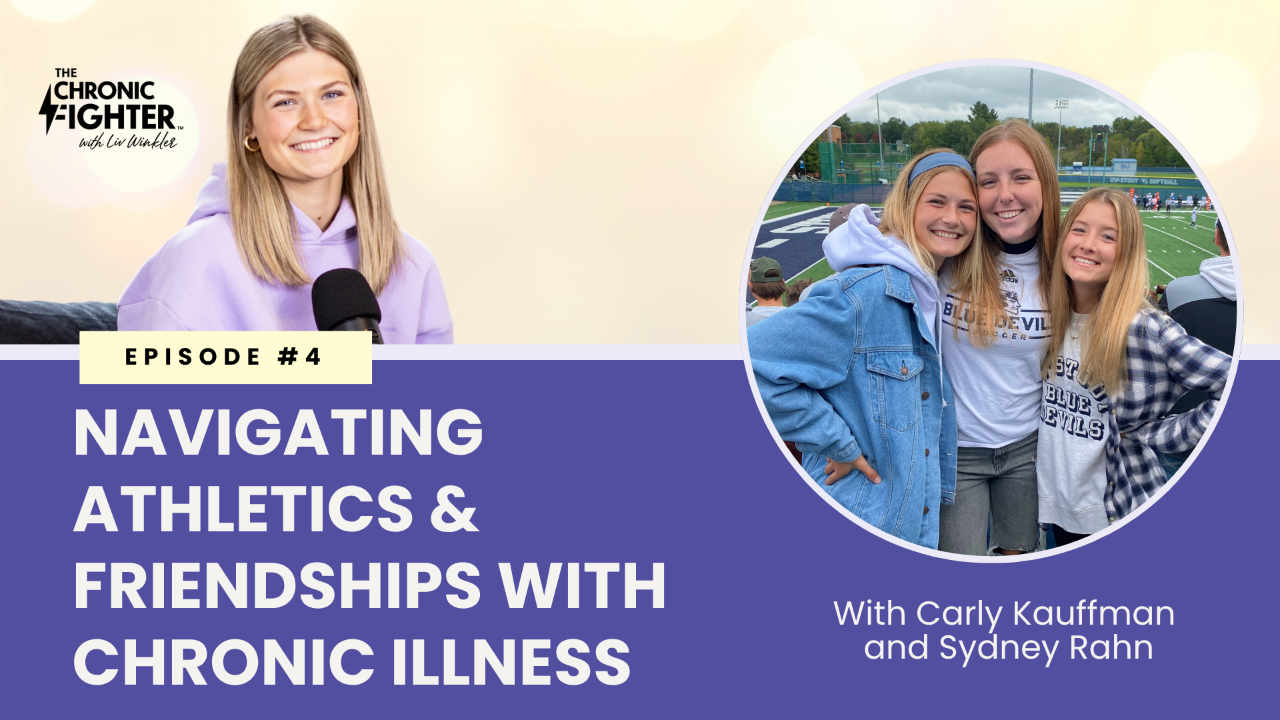
In Episode 4 of The Chronic Fighter Podcast, I sat down with two of my best friends and former college soccer teammates, Sydney Rahn and Carly Overman (Kauffman). They were there during a period of my life when my health changed dramatically—from playing collegiate soccer to eventually becoming bedridden.
We talked about what it was really like to navigate athletics with chronic illness, but we also talked about something just as important: friendship.
For years, I had wondered what my health struggles looked like from their perspective. Did they ever feel like they had to take care of me? Did changing plans because of my health frustrate them? Did they see me differently because I was sick?
And maybe the question I was most afraid to ask: Did they ever feel like I was a burden?
Their answers reminded me of something I think anyone living with chronic illness needs to hear.
The people who truly love you can see everything you’re going through without allowing your illness to become everything they see.
Being an Athlete With Chronic Illness
Athletes are taught to push.
You show up when you’re tired. You work harder. You stay disciplined. You learn to be uncomfortable and keep going.
Those qualities can make you a great athlete. But chronic illness complicates that mindset.
Sometimes pushing yourself is exactly what you need to do. Other times, pushing through your body’s warning signs can make things worse.
One of the hardest things I had to learn was the difference.
Throughout college, there was so much happening behind the scenes just to allow me to participate in the sport I loved. Managing my health required discipline in ways that had nothing to do with how hard I could run or how much effort I gave at practice.
I had to think about how I was fueling my body, how much energy I had, what symptoms I was experiencing, and what my body needed in order to keep going.
From the outside, someone might have simply seen a college soccer player.
They couldn't necessarily see everything it took for me to be that soccer player.
And I think that's important to remember about anyone living with chronic illness: you rarely see the whole story.
Someone may look completely fine while using an incredible amount of physical and mental energy just to participate in the same things everyone else is doing.
When Your Body Changes the Plans You Had for Yourself
Soccer meant so much to me, which made it incredibly difficult when my health began changing what I could do.
A torn labrum affected my soccer career, and over time my health challenges became much bigger than one injury. Eventually, the person who had been playing collegiate soccer reached a point where she was spending most of her time in bed.
That's a huge change.
When something you love has been part of your identity for years, losing the ability to do it the way you once did can leave you wondering who you are without it.
But I've learned that purpose doesn't have to stay the same throughout your life.
There was a time when soccer gave me purpose, structure, friendships, goals, and something to work toward. Today, some of those things come from completely different places.
Your passions are allowed to evolve.
Losing the ability to do something you once loved doesn't mean you've lost the ability to find something meaningful again.
The Part of Chronic Illness Friends Don't Always See
One of the biggest themes Carly, Syd, and I talked about was how much of chronic illness happens behind the scenes.
That was true with soccer, but it was also true in my friendships.
There were things I didn't always talk about.
Sometimes that was because I didn't know how to explain what was happening. Sometimes I didn't want my health to dominate the conversation. And sometimes I worried about how sharing what I was going through would affect the people around me.
That's where chronic illness can become lonely.
You can be surrounded by people who love you and still feel like you have to protect them from what you're experiencing.
But when I started opening up more about my health, my friends had an opportunity to understand me better.
They didn't need me to pretend everything was okay.
They needed me to let them in.
“Am I Becoming a Burden?”
I think this is a fear many people with chronic illness understand.
When you have to cancel plans, leave early, rest more, eat differently, or ask people to accommodate something you need, it can be easy to start wondering:
Are people getting tired of this?
Am I making everything harder?
Do my friends wish they didn't have to think about my health?
Am I too much?
Those were some of the questions I finally got to ask Carly and Syd.
And the answers were not what the fearful voice in my head had spent years imagining.
They had never thought I was “too much” because of my health.
They didn't look back on those years and define me by the things I couldn't do.
Instead, they saw what I had gone through as a reflection of my resilience.
That meant a lot to hear.
Because chronic illness can change the way you see yourself so much that you begin assuming everyone else sees you that way too.
Sometimes they don't.
Friendship Doesn't Require Having the Perfect Words
One of the reasons I wanted Carly and Syd on the podcast was because chronic illness doesn't only affect the person experiencing it.
Friends often want to help, but they don't necessarily know how.
They may be afraid of asking too many questions. They may worry about saying the wrong thing. They may not know whether you want to talk about your health or would rather have one part of your day where nobody asks you about it.
Supporting someone with chronic illness doesn't require becoming an expert on their condition.
Sometimes support is simply reaching out.
Listening.
Checking in.
Continuing to invite them, even if they've had to say no before.
Giving them the opportunity to decide how much they want to share.
And understanding that what they're capable of today might be completely different six months from now.
Chronic illness changes from season to season. Good friendship can make room for those changes.
Your Wins Are Allowed to Change Too
One of the hardest adjustments with chronic illness can be learning that success doesn't always look the way it used to.
For an athlete, a win might once have meant playing a great game, getting stronger, reaching a new goal, or pushing through a difficult workout.
Then chronic illness changes the definition.
On a difficult day, getting out of bed might be a win.
Walking to the kitchen might be a win.
Making yourself something nourishing to eat might be a win.
Getting outside, calling a friend, taking care of your body, or finding one thing that brings you joy might be a win.
That doesn't mean you've stopped being driven.
It means you're learning to recognize what effort looks like in the season you're actually living in.
Your Health Is Part of Your Story—Not the Whole Story
Toward the end of our conversation, I asked Carly and Syd to look back on our college years.
After everything that happened with my health, how did they remember me?
Was I the friend who was chronically ill?
Or did they remember everything else?
The soccer.
The friendships.
The laughter.
The memories we made together.
That conversation reminded me how differently the people who love us can see our lives compared with how we sometimes see ourselves.
When you're the one living with chronic illness, it can feel enormous. You think about symptoms, appointments, medications, food, energy, sleep, pain, and whether your body will cooperate with whatever you're supposed to do that day.
It's understandable that illness can start to feel like the biggest part of your story.
But to the people who love you, you are still you.
You are the friend they laughed with.
The teammate they competed beside.
The person they made memories with.
Your health may be part of those memories, but it doesn't erase everything else.
And sometimes, the people who walked through the hardest seasons beside you don't look back and see how much your illness took away.
They see how hard you fought to keep living your life.
Frequently Asked Questions About Friendship and Chronic Illness
How can chronic illness affect friendships?
Chronic illness can affect friendships in many ways, including changes in energy, canceled plans, social limitations, communication needs, and the amount of support someone requires. Because symptoms can fluctuate, a person may be able to participate in one activity but not another. Open communication and flexibility can help friendships adapt.
How can I support a friend with chronic illness?
You don't need to fix their health. Listen, believe them, check in, keep them included when possible, and ask what kind of support they need. Sometimes simply reminding someone that you're there can be incredibly meaningful.
Why do athletes with chronic illness struggle with identity?
For many athletes, sports are deeply connected to identity, community, confidence, and purpose. When illness or injury limits participation, it can feel like losing more than a physical activity. It can require someone to explore who they are outside of their sport.
Does listening to your body mean giving up on your goals?
Not necessarily. Listening to your body can mean modifying your approach rather than abandoning your goal. Depending on your circumstances, that could mean changing the intensity, choosing a different activity, resting, or working with qualified professionals to determine what is appropriate.
How do I stop feeling like a burden because of my chronic illness?
Remember that healthy relationships aren't perfectly equal every day. There will be seasons when you need more support, just as there may be seasons when you have more capacity to give. Needing help doesn't make you a bad friend.
Can friendships survive major health changes?
Absolutely. Friendships may look different as your circumstances change, but they don't necessarily have to disappear. Strong friendships can adapt to new routines, limitations, distance, and different seasons of life.
And if this conversation resonates with you, subscribe to The Chronic Fighter for honest conversations, practical strategies, and stories about navigating chronic illness while continuing to build a life that feels meaningful to you.
Feel Free to Reach Out
Questions about the membership, the podcast, collaborations, or something else?
We would love to hear from you.
Use the form below and we’ll get back to you as soon as we can.
We hate SPAM. We will never sell your information, for any reason.