
When Doctor’s Appointments Make You Anxious: Learning to Feel Safer in Medical Settings
Not many people know this, but my legal name is Olivia.
Nobody calls me that.
Except medical professionals.
For years, I’ve heard some version of the same question at hospitals, clinics, and doctor’s offices:
“Can you tell me your name and date of birth?”
I’ve repeated Olivia and “2/28/03” so many times in medical settings that both became connected to some of the hardest experiences of my life. Even now, hearing my legal name at an appointment can make me feel physically sick.
It sounds like such a small thing, but that’s what medical anxiety can look like.
Sometimes it’s the obvious things: waiting for test results, having blood drawn, or wondering whether a new doctor will finally understand what’s going on.
Other times, it’s a hospital bracelet. A gown. Bright fluorescent lights. Stepping on the scale. Or hearing a question you’ve answered what feels like a hundred times before.
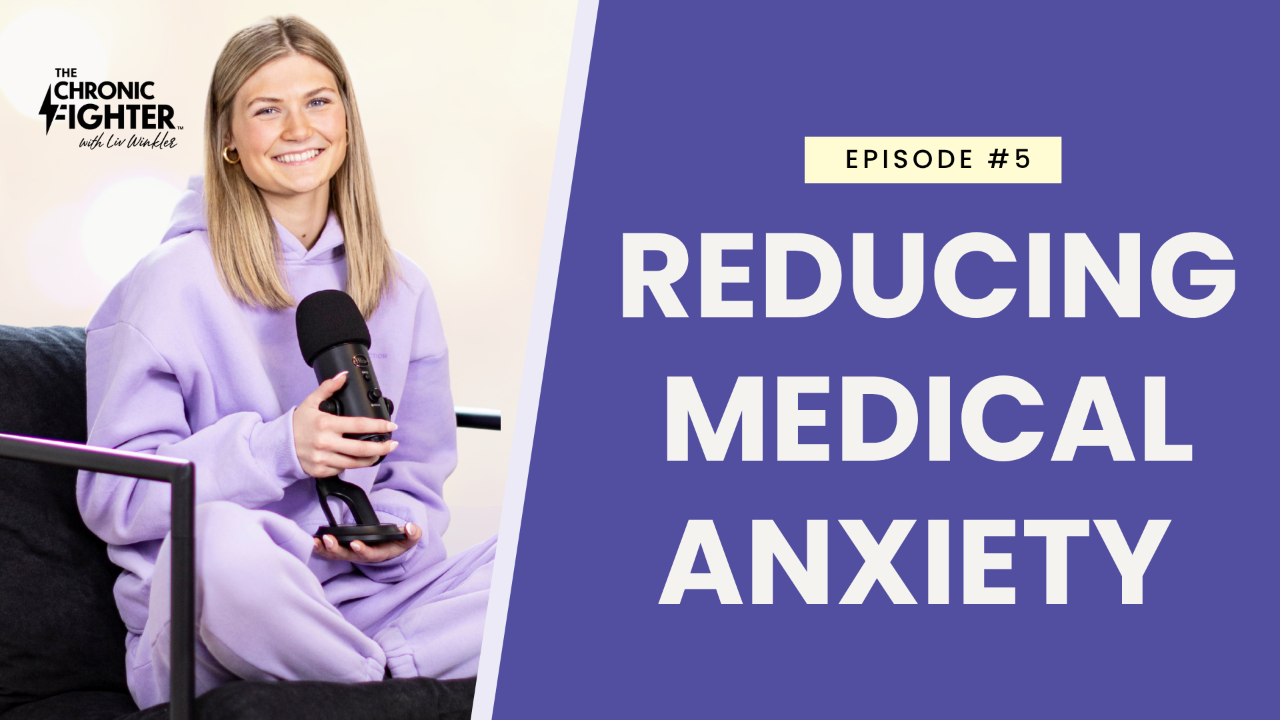
In Episode 5 of The Chronic Fighter Podcast, I’m talking about the medical anxiety I developed after years of appointments, testing, and searching for answers, but also about what has helped me approach those experiences differently.
I still don’t love going to the doctor. But I no longer feel as helpless walking into an appointment as I once did.
When Medical Settings Become Triggers
One of the questions I used to dread most when meeting a new provider was:
“So... tell me what’s been going on.”
Where do you even start when you’ve lived with chronic illness for most of your life?
Do I tell you what happened this week?
Do I go back a few years?
Do I explain all of my diagnoses, medications, procedures, specialists, hospital visits, and test results?
What if I forget something important?
It felt like I was starting my entire story over every single time.
And when you’re already sitting in a bright exam room, not feeling well, trying to remember years of medical history while knowing you only have so much time with the provider, it can be a lot.
Over time, there were other things my body began to connect with those experiences too.
I hate hospital bracelets and take them off as soon as I possibly can.
Bright lights can increase my dizziness, nausea, migraines, and sensory overload, so there have been plenty of appointments where I’ve worn sunglasses or asked if the lights could be dimmed.
Getting my vitals taken, especially my weight, became another trigger.
None of these things were happening because I had decided I was afraid of a hospital bracelet or fluorescent light.
They had simply become connected to years of difficult medical experiences.
Once I understood that, I stopped being as frustrated with myself for reacting to them.
What I Do Before an Appointment
A lot of what has helped me happens before I even walk into the building.
I try not to wait until I’m completely overwhelmed to think about calming my nervous system. If I know I have an appointment coming up, I’ll intentionally do things beforehand that help me feel more grounded.
Prayer is one of the biggest ones for me. It helps me feel calm and reminds me that whatever happens at that appointment, I’m not carrying everything by myself.
I also like grounding exercises. Sometimes I’ll do one while taking a walk before I leave the house and focus on my five senses: what I can see, hear, smell, taste, and feel.
It sounds simple, but it pulls my attention back to where I actually am instead of everything I’m worried might happen later.
Slow breathing helps too. I don’t personally like having to count my breaths because that can become one more thing to think about, so I usually just focus on taking slower, deeper breaths and letting my stomach expand as I breathe in.
Other days, I’ll use my Sensate vagus nerve stimulation device, rest beforehand if I have time, wear comfortable clothes, and dress in layers because medical offices are somehow either freezing or way too warm.
I definitely don’t do every one of these things before every appointment.
The point isn’t to create another routine you feel like you have to do perfectly.
It’s figuring out what helps your body walk into the appointment a little calmer than it otherwise would.
I Had to Stop Putting So Much Pressure on Every Appointment
This has probably been one of the biggest changes for me.
For years, I went into appointments thinking:
This doctor has to have the answer.
This appointment has to go well.
Maybe this is finally the thing that makes me better.
And when an appointment didn’t go the way I hoped, I was crushed.
There were seasons of my life when it felt like everything depended on what happened in that room.
Eventually, I had to recognize how much pressure I was putting on one appointment and on myself.
I can’t control what a provider knows.
I can’t control how they respond to me.
I can’t control whether they immediately understand everything I’ve been experiencing.
And I definitely can’t control whether one appointment gives me the answer I’ve been waiting years for.
What I can do is show up, be honest, ask my questions, and advocate for myself.
Now, before appointments, I try to remind myself:
I’m going to do the best I can today.
That mindset has helped me more than expecting every appointment to change my life.
Small Things Can Make Appointments Easier
Some of the things that help me most are honestly pretty basic.
I almost always have headphones with me.
Music is one of the easiest ways for me to regulate my nervous system. I’ll listen to a happy playlist or worship music in the car, and a lot of the time I’ll keep my headphones in while I’m sitting in the waiting room.
During one of the hardest seasons of my health, when I was dealing with undiagnosed Crohn’s disease, I even had a specific song that became my “fight song.” I would listen to it before appointments and picture myself getting through whatever was ahead.
I also chew gum sometimes because having that sensory input gives my brain something else to focus on.
Heat is a big trigger for me, so I usually have cold water with me and often bring my neck fan.
And yes, I’ve worn sunglasses inside medical offices.
I definitely did not look my cutest walking into appointments with sunglasses and a fan around my neck, but if it helped me feel better, I really didn’t care.
Those things might seem insignificant, but when your nervous system is already on high alert, reducing even a little bit of sensory stress can help.
You Don’t Have to Be the Perfect Patient
Another thing I had to unlearn was the idea that I needed to be the perfect patient.
Over the years, I heard comments like:
“You’re a medical mystery.”
“You’re a complicated case.”
“You’re way too young to be dealing with this.”
Even when people didn’t mean those comments negatively, they stuck with me.
By the time I met with another provider, I felt like I needed to explain everything perfectly.
I needed to remember every symptom.
Answer every question correctly.
Make sure I didn’t forget anything important.
And somehow communicate years of medical history in a way that made complete sense.
That’s a lot of pressure to put on yourself when you already don’t feel well.
I’ve gotten much better about slowing down.
If I need a minute to think about an answer, I take one.
If I don’t understand something, I ask.
If I’m anxious, I can say that.
And if I don’t feel heard, I can advocate for myself.
I also often bring someone I trust with me. Sometimes just having another person in the room makes it easier to remember what I wanted to ask or helps me feel less alone.
You don’t have to have all the right words. You just have to show up, be honest about what you’re experiencing, and do the best you can.
Give Yourself Something to Look Forward To Afterwards
Growing up, my mom would often take me to get an acai bowl after an appointment.
It became our thing.
And even though it was small, having something enjoyable planned afterwards gave me something else to think about besides the appointment.
I still think this can be really helpful.
Maybe it’s your favorite meal.
Maybe you go home and watch a show you’ve been saving.
Maybe you meet a friend, get coffee, take your dog for a walk, or just put on comfortable clothes and do absolutely nothing.
It doesn’t need to be some big reward.
It’s just nice to remind yourself that the appointment is one part of your day. It doesn’t have to become the entire day.
What Happens After the Appointment Matters Too
Appointments can be exhausting even when they go well.
Sometimes I leave and don’t realize how much tension I was holding until I’m back home.
That’s why I try to give my body a chance to reset afterwards.
For me, that usually means taking a shower, doing my skin care, eating a good meal, and probably cuddling with Archie.
I’ve also gotten much better at giving myself credit for simply going.
There were so many years when I would leave an appointment disappointed because I didn’t get the answer I wanted or because there was another test, another specialist, or another thing we still didn’t understand.
Now I try to look at it differently.
No matter how the appointment went, I showed up for myself.
That counts for something.
For a long time, I felt like my body was betraying me. It was doing things I didn’t understand, and I depended on other people to explain why.
Today I try to remind myself that my body has carried me through a lot.
That doesn’t mean I love every symptom or pretend hard days aren’t hard.
It just means I’ve learned to have a little more appreciation for the body that keeps showing up with me.
One Appointment Doesn’t Determine Your Future
Medical appointments can still be difficult for me.
I still have triggers, and there are definitely times when my body reacts before I have a chance to remind myself that I’m okay.
But I have so many more tools now than I did years ago.
And maybe more importantly, I don’t walk into every appointment believing my entire future depends on what happens there.
One doctor or one appointment doesn’t determine your future.
And one setback doesn’t mean you’re always going to feel the way you feel today.
For me, a huge part of being able to believe that, comes from my faith in God.
There have been many times throughout my health journey when I had no idea what was happening next. I didn’t know when we would find answers, whether a treatment would work, or when I would feel better.
I’ve had to learn that I can hope for answers and healing without making my ability to have hope dependent on receiving them right away.
My story isn’t over because I had a bad appointment.
And neither is yours.
Sometimes hope is what carries us until we can carry ourselves again.
Frequently Asked Questions About Medical Anxiety
Why can doctor’s appointments cause so much anxiety?
There can be a lot behind it. You may be worried about test results, afraid you won’t be believed, overwhelmed by having to explain your medical history again, or reminded of difficult experiences you’ve had in medical settings before. When you’ve spent a lot of time in healthcare environments, even small things can sometimes become associated with those experiences.
What can help before an appointment?
It depends on the person, but I’ve found it helpful to think ahead about what makes my body feel calmer. For me, that can include prayer, grounding, slow breathing, music, comfortable clothes, getting enough rest, and bringing someone I trust with me.
Is it okay to tell a doctor that I’m anxious?
Yes. If I’m especially anxious or something specific is making me uncomfortable, I’ve learned that it’s okay to tell my provider. I also ask questions when I don’t understand something and speak up when I need more time.
Can sensory things like bright lights make medical appointments harder?
They can for some people. Bright lights, noise, temperature, and other sensory input can be especially difficult if you already deal with migraines, light sensitivity, dysautonomia, fatigue, or sensory overload. I’ve worn sunglasses, used a neck fan, brought cold water, and asked for lights to be dimmed when possible.
What can I do after a stressful appointment?
Give yourself some time to come down from it. I usually do things that make me feel comfortable and cared for, like showering, eating, resting, or spending time with my dog. It can also help to have something enjoyable planned afterwards so the whole day doesn’t feel centered around the appointment.
And if this conversation resonates with you, subscribe to The Chronic Fighter for honest conversations, practical strategies, and stories about navigating chronic illness while continuing to build a life that feels meaningful to you.
Feel Free to Reach Out
Questions about the membership, the podcast, collaborations, or something else?
We would love to hear from you.
Use the form below and we’ll get back to you as soon as we can.
We hate SPAM. We will never sell your information, for any reason.