The Chronic Fighter with Liv Winkler
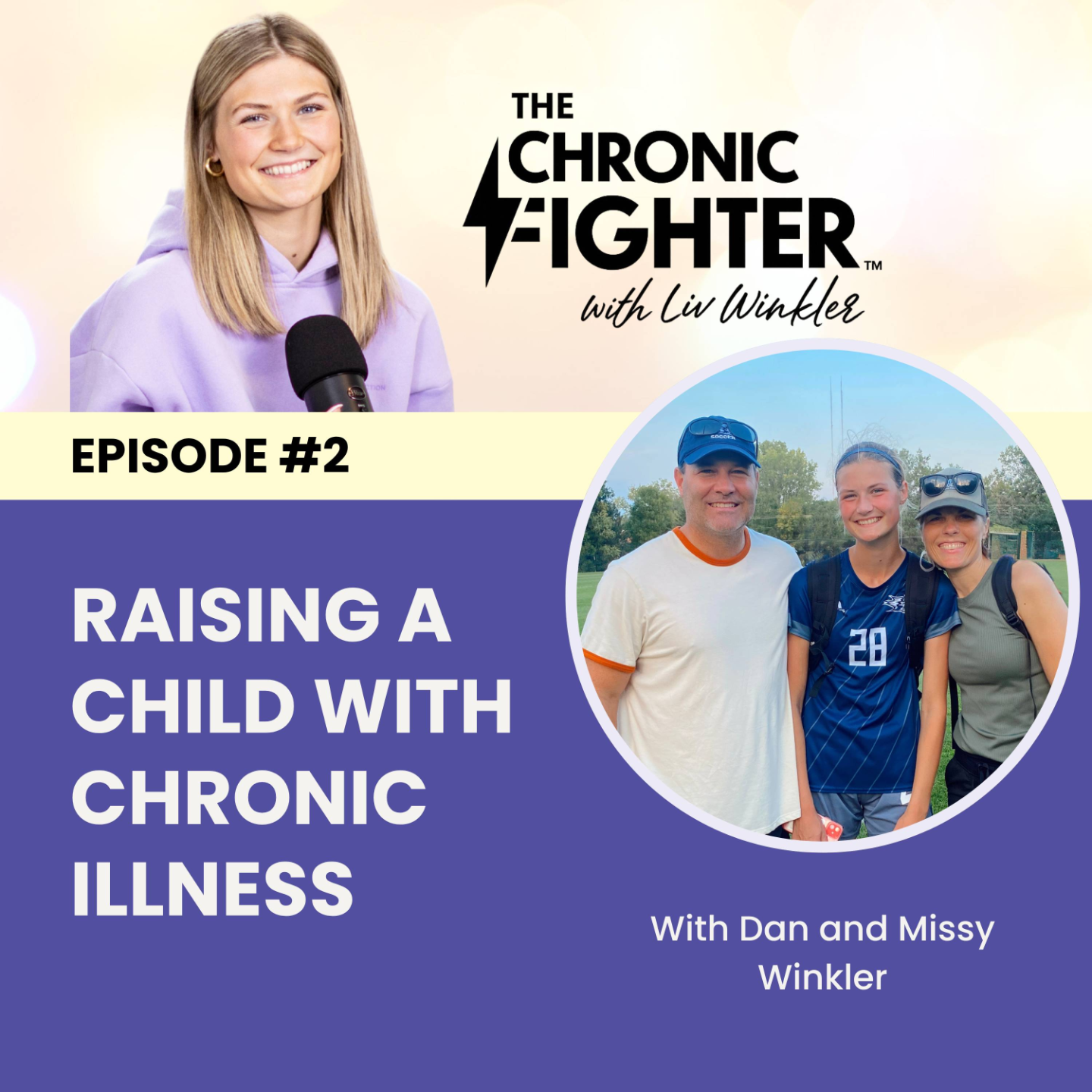
Episode 2: Raising a Child with Chronic Illness (Our Family's Story)
Living with chronic illness doesn't just affect the person who's sick. It affects the entire family.
In this episode of The Chronic Fighter, I'm joined by my parents, Dan and Missy, to share our family's story from all three perspectives.
For more than 20 years, they walked beside me through unanswered questions, countless doctor's appointments, hospital visits, and years of being told my symptoms were "just anxiety." We reflect on what it was really like navigating a healthcare system that couldn't see the full picture, the lessons we learned along the way, and why our journey inspired us to create The Chronic Fighter.
We'll also talk about why purpose became such an important part of my healing, how we learned to navigate uncertainty, and the advice we'd give to both families and young people living with chronic illness today.
If chronic illness has impacted your life, or the life of someone you love, this episode is for you.



What You'll Hear in This Episode
01:26 – Welcome and introducing my parents, Missy and Dan
03:08 – My health journey and how my diagnoses finally connected
06:57 – Navigating the healthcare system, functional medicine, and becoming my own advocat
22:39 – The biggest misconceptions about my health, PNES, and nervous system tools
28:13 – Why soccer and maintaining normalcy became such an important part of my healing
30:35 – What my parents were going through behind the scenes and the emotional toll
36:00 – Overcoming isolation, finding support, and building a community
42:31 – Living with uncertainty, taking things one step at a time, and focusing on what we can control
45:53 – Why my anxiety was misunderstood, handling academic pressure, and removing the "Type A" label
49:49 – Managing missed school, accommodations, and communication with teachers
54:45 – What changed when I finally stopped hiding my chronic illness and embraced my story
59:56 – Advice for parents, caregivers, and young people living with chronic illness
1:03:59 – Why we created The Chronic Fighter and our shared mission to help others
Biggest Takeaways
✔ Chronic illness impacts the entire family. It’s just as important for caregivers to have a support system, as it is for the child.
✔ Trust yourself when advocating for your health or your child’s health. You know your situation and needs better than anyone else.
✔ Helping your child find their passion is vital for building an identity beyond their illness, and having a reason to get out of bed every day.
✔ Healing isn't linear. Flares and setbacks are part of the journey, and learning to respond to them without panic can keep one hard day from feeling like you’re starting over.
Resources Mentioned
The Chronic Fighter: https://thechronicfighter.com
Business & Coaching Socials
TikTok: @thechronicfighterco
Facebook: The Chronic Fighter
Instagram: @thechronicfighterco
Threads: @thechronicfighterco
Podcast Socials
TikTok: @thechronicfighterpod
Facebook: The Chronic Fighter Pod
Instagram: @thechronicfighterpod
If You Enjoyed This Episode
If this conversation resonated with you, I'd love for you to subscribe, leave a review, and share this episode with someone who needs to hear it.
Whether you're living with chronic illness yourself or walking alongside someone who is, I hope this episode reminds you that you don't have to navigate this journey alone.
Thank you for listening, and I'll see you in the next episode.
Your Journey Doesn’t End Here
Explore more episodes of The Chronic Fighter Podcast and continue discovering tools, stories, and support to help you build a life you love—while caring for your body along the way.
Main PodcastTranscript
Missy: ...but it actually started at birth. She was born and it was a little bit of a traumatic birth, and then a few hours later, the doctors came in and said that she would have to be life-flighted to Minneapolis because her heart was too big.
Dan: We can relate to that because soccer, in a way, has saved her life. It gets you out of bed and it keeps you moving forward. Any parent would relate to that. Nothing matters if you have a sick child. Everything stops. We do everything we can to help you.
Missy: I think that that is your reason and your purpose for all of that, is that you have so many experiences to draw from to help others.
Liv: I went from having three seizures a day to starting my own podcast and business. Welcome to The Chronic Fighter Podcast, where we help teens and young adults with chronic illness take their lives back. I'm your host, Liv Winkler, a health and nutrition coach, founder of The Chronic Fighter health coaching business, lifelong chronic illness girl with a degree in psychology and concentration in health coaching. This podcast meets you exactly where you're at in your health journey and offers science-backed tools that changed my life and can change yours, too. I would love to be the person for you that I wished I had growing up.
Liv: Welcome back to The Chronic Fighter Podcast. I'm your host, Liv Winkler, and we've a very exciting conversation today because I'm here with my amazing parents: my mom, Missy...
Missy: Hi.
Liv: ...my dad, Dan...
Dan: Hey.
Liv: ...and they're here to talk about their perspective of raising a child with chronic illness. Very grateful you guys are here. I would not be in the place that I am today without you two. So, welcome to the podcast.
Dan: Thanks for having us.
Missy: We're excited.
Liv: Well, I'd love to start by having each of you share what you do for work outside of The Chronic Fighter, and then within it. For those of you that don't know, The Chronic Fighter is more than a podcast; we also have health coaching and a membership option to help people with chronic illness. So, whoever wants to start.
Dan: Well, I've been a high school math teacher for 28 years, so I've had lots of experiences, you know, dealing with students and students with chronic illness and and things that they fought through. And, uh, you know, I I kind of bring that in the psychology and stories from my experiences at school to The Chronic Fighter business. Other than that, I am just another person to bounce ideas off of. I also try to help out a little bit with the tech support, so... and otherwise just another person's perspective.
Liv: Yep.
Missy: And I'm currently a real estate agent, but I have owned my own business in the past—I had a preschool, so I have a little business experience there. But now I'm partners with Liv, and just so excited to use all that we've all gone through, especially what Liv's gone through, but we all went through it, to find purpose in it all and help others.
Liv: Yeah, for sure. Super cool being able to work with you guys.
Missy: Yeah, it's been really a fun journey.
Liv: Mm-hmm.
Liv: Well, before we get into some of the more specific questions, I think we should give some background on my health story. But because my health story isn't straightforward, I wanted to give a brief overview before you two share. Well, one of the biggest things we've learned is that my story isn't really about collecting diagnoses; it's about understanding the system underneath them. I was born with hypermobile spectrum disorder in the same family as the Ehlers-Danlos syndrome, a connective tissue condition that appears to have affected my body in ways we didn't understand for years. Looking back, we can see that my nervous system had trouble regulating itself from a very young age. Things like heart rate, blood pressure, digestion, temperature, and energy were never working quite like they should. As I got older, those challenges eventually received different names: dysautonomia, POTS, Crohn's disease, celiac disease, and PNES. They're all distinct medical conditions, but in my experience, they've been deeply connected. Understanding that connection changed everything, because instead of chasing one symptom after another, I finally started supporting my body as a whole.
Missy: Yeah, and that kind of gets into our mission as a business. It doesn't matter if you don't have diagnoses that are the same as Liv. It doesn't even matter if you've been diagnosed yet. Our mission is to use Liv's experience to just help you where you're at right now. And a lot of that is lifestyle choices, making—helping your body feel safe, and living the best life that you can live right now, not waiting until you're better before you start doing that.
Liv: Yeah, I would have waited 22 years, right? I waited and missed out on a lot of unbelievable experiences.
Missy: Yes, for sure.
Liv: That's awesome. Do you want to expand on my whole story now that I gave kind of a background?
Missy: Sure, I mean we can talk about a few things because it's... there's been a lot! But it actually started at birth. She was born and it was a little bit of a traumatic birth, and then a few hours later, the doctors came in and said that she would have to be life-flighted to Minneapolis because her heart was too big. A few hours later, they determined that she had something called wet lungs, and she was able to stay in Duluth where she was born, but she was in the NICU for five days. So, that's kind of how she started out. Then she had several different things along the way, but the next kind of major one is she had a febrile seizure when she was 18 months old. Her fever spiked really quickly, which caused her to have a seizure, and as you can imagine, that was terrifying. On top of it, I was like eight months pregnant, huge! And she was in the hospital for three days with unexplained high temps until finally she broke out in a rash and they were able to tell us it was roseola. And what we've been told a lot along the way is that something like a virus can trigger illnesses. And so that that experience could have been kind of the start of a lot of what she went through, and also just genetically what she was set up to to have. But it may have been a significant trigger in the whole scheme of things. And then, you know, we had other scary times, like one time I was looking at her from down the hall and I thought she was making goofy faces at me, and then all of a sudden, she pulled down a floating shelf with her and fell on the ground a foot away from our flight of stairs, which was absolutely terrifying. And we rushed her to the ER, and all we got from that visit was that she probably had dehydration, which we weren't exactly...
Dan: "Go home and drink some water," you know.
Missy: Yeah, we weren't really buying that. Uh, no, we weren't sold on that, but... but yeah, and then then just other experiences that Liv's talked about maybe on her first episode, and she'll get into it more along the way, but then then she started having some POTS episodes, and then some seizures, so, yeah, just a lot of events, kind of scary events throughout her life that nobody could really explain to us.
Liv: Mm-hmm, yeah. That was just a few of the many examples.
Dan: Right.
Liv: And just you want to explain a little bit about how like what doctors would tell us, like, "Oh, maybe like that's just anxiety," or not to downplay anxiety, but it's like, okay, clearly there's a physical issue going on here.
Missy: Yeah, and I think that you get that a lot when you have a child with stomach pain especially, because automatically they say it's, you know, it's nerves, starting kindergarten, and it's probably anxiety. And Dan and I were always open to the idea of anxiety, and we recognize that that definitely could be part of the picture, but her physical symptoms were so severe—on the floor doubled over in pain, trouble eating anything. I mean, it just seemed like beyond anxiety, don't you think?
Dan: Yeah, I mean, and they were present in themselves in, you know, in such painful ways with her throat and with her her stomach and, you know, with her stiffness, and so yeah, so it's like, well, hard to believe that it's just kind of the mental component to it. There's got to be something more to it. And it was apparent that at its at an earlier age that it's a kind of a regulation issue in your body, and you know, you're trying to get into balance, and it was clear that you had you struggled to get back into balance at times.
Liv: And that's where like the hypermobility spectrum disorder affects all the different, you know, systems in your body and...
Missy: Side effect, yeah.
Liv: ...or can affect, yeah. That's why it's a spectrum disorder. It's, I mean...
Dan: Well, the first we heard of hypermobility, well, "Are you double-jointed? Can you bend backwards?" Well, then that explains your stomach. Well...
Liv: What?
Dan: Yeah, right. For us, we're like, "I don't understand how that would be connected," but it is all connected, and you know, your stomach lining, your GI tract, and all of your organs and connective tissue throughout the body, you know, if it's too elastic, it doesn't necessarily function correctly and could have impact symptomatically.
Liv: Mm-hmm. And like look at Mom, like she's probably hypermobile, too. She was a gymnast, and you were always double-jointed, yep. And I mean, yeah, you probably have it, but you don't seem to have...
Missy: I don't have any issues with it.
Dan: Right.
Liv: ...just so interesting when mine's so extreme. So, that's hard to understand it, too.
Missy: And there's just so much more awareness now. I mean, when we started this, you were a toddler when you started having severe issues, and like nobody really knew about hypermobility back then like they do now.
Liv: For sure. But yeah, those physical issues and like back to the anxiety, it's like, well, yeah, I probably did have anxiety, but like why? Why? I I had anxiety because of probably because of the physical issues I was going through. Like, of course I did. If my stomach hurt so bad, of course I'm going to be anxious to eat every time. Of course I'm going to be anxious about school.
Dan: Yeah, you're having difficulty staying in school and in doing going to events that you want to go to, of course there's going to be a mental component to it, yeah.
Liv: Yes, for sure. It's like I I definitely think that the physical and mental aspect go hand in hand, you know. They're both intertwined and affected by each other.
Liv: Okay, so fast forward, like when did we start getting some answers in my story? When when was the turning point?
Missy: Well, when you graduated from college, somehow you made it through college, somehow you made it through playing two years of college soccer. But you graduated and I thought, "Okay, you won't have the stress of school, that added stress probably made your symptoms worse." But instead of getting better after graduation, you were just getting worse and worse. You became bedridden, and Dan and I were just like, "We can't keep watching this. Like, we have to get her help." I mean, we had gone everywhere by this point, but and we had done both Western medicine—Mayo, Children's—we had gone everywhere. And then we also used functional medicine doctors, and we had some incredible functional medicine doctors who did genetic testing and and based a supplement protocol on that genetic testing, and you would have a good year here and there, but then it you'd start to slip off of that and your health would start to deteriorate again, and we just never could quite figure out why.
Liv: And that was confusing, too.
Missy: It was.
Liv: Like, okay, I have a year that's, for me, pretty good.
Missy: Yeah, relatively speaking. It wasn't as good as your friends, but it was better.
Liv: But yeah, and then the next year, I mean, you look at college, even. Freshman year was like one of the best years of my life, and then sophomore year, it was like completely different. Yeah, I went way downhill. But anyways, so...
Missy: So, I just, you know, we follow Mark Hyman. He's one of the top functional medicine doctors on the planet, and I told Dan, I'm like, "I'm done. Like, we have to go to the top. We have to get the best we can get because she's suffering." And so we went out to Mark Hyman's clinic out in the on the East Coast. They ran tens of thousands of dollars worth of testing, and they finally found out that she had Crohn's, which we believe she had probably since high school. She had gone through the Mayo and had colonoscopy, endoscopy, and and we now know that it can get missed if they don't scope in the right spot, they may have missed it. And we suspected it, not necessarily based on the symptoms as much as the fact that Dan's brother has Crohn's. I mean, partly of the symptoms, but she didn't really have the typical symptoms that somebody with Crohn's would have, and I think that's part of why it was missed, also. But anyways, the doctor out East said Crohn's. Um, she had huge inflammation throughout her body, and then he thought the umbrella to it all was this hypermobility or hypermobile spectrum disorder. And that was, we had heard of it, but we started really researching it from that point on. She got treatment for Crohn's, her PNES seizures started to lessen once the Crohn's started getting under control, which just reaffirmed that the physical symptoms that you were having affected your PNES seizures more than like anxiety or the mental piece. I mean, sure that when you had a real stressful week, that would exacerbate your seizures, but it seemed to be more driven, or they seemed to be more driven by your physical health.
Dan: How keep in mind at the time, you had a torn labrum in your hip, and you were fighting through that, and you were having a hard time sleeping or moving around, just because it hurt so bad. You played on it for what, three years?
Liv: Yeah, three years.
Dan: Um, and you were a candidate for surgery, and you did have surgery on it in the middle of that, and...
Missy: In the middle of all of this.
Dan: All of that.
Liv: It's just inflammation! Like, yeah, it was... my body was on overload, like I... that's why the PNES seizures were so bad during that time, because it's like my body didn't know how to handle it, so that's why it was shutting down.
Missy: Yeah, it...
Liv: Yes. It was just too much pain for someone to be in. Too many things happening at once.
Missy: Right. At once.
Liv: And I would just want to add, too, that another confusing thing about, you know, looking for answers growing up was I was doing the lifestyle changes. I mean, that that was what we preach, like that was what allowed me—one of the biggest things that allowed me to still have some normalcy and stay in school and play soccer, and you know, that kind of thing. But it was confusing because we're like, do we... we I have a clean diet, like is this not food-related other than being celiac and dairy-free? So, we're like, okay, I eat healthier maybe than the average, like there was a missing piece, you know, we were confused by...
Dan: Well, we were chasing diet exclusively for a long time, and we...
Missy: And that caused anxiety. I had anxiety over it!
Dan: ...because you'd have flare-ups and we're like, "We can't do any better! Like, like just go eat broccoli and a piece of meat and call it good!"
Liv: Like doctors are like would bring it up and we're like, "I'm eating healthy! I'm eating clean, I'm eating whole foods, I'm eating the right kinds of things. This isn't enough!"
Dan: And everyone in the house was doing the same. It's not like you were getting contamination, so...
Liv: It just gets to be too much. Like, there's a certain breaking point where it's like, okay, I'm doing everything I can in my control. Like there's clearly a missing piece here.
Missy: Yes. Yes.
Liv: You know, so...
Missy: But everything that you were doing allowed you to play soccer and to stay in school, and you kind of figured that out innately...
Liv: Yeah.
Missy: ...which was incredible, but I think a lot of it comes from your your drive to not miss out. But you have to find a balance. You can't just push through. You can't just push through pain and push through and push through, because you will crash, and that's what happened after you graduated. You crashed.
Liv: Yeah, you definitely need a balance. And that it's just interesting thinking back now because, like you said, I I just kind of figured that out on my own, and it's interesting I did that from such a young age. I mean, with soccer, I would have to figure out my food for... I mean, sure you helped, but figure out my food for the bus rides, figure out, yeah, traveling, I'd have to fuel way more than everyone around me, eat way more, and and like hydrate more than the average. Like there were just all these things, get to sleep at a certain time every night.
Dan: Your teammates go out at 10:00 at night, you may not do it because you need to rest, yeah.
Liv: Yes! And and yes, it was harder than maybe my peers, but it's like I don't regret any of it. That's what allowed me to do what I was passionate about: playing soccer and staying in school, which I I mean that was that I can't even imagine where my life would have been if I had to be homeschooled or like quit soccer or anything like that. I mean...
Missy: Yeah.
Liv: ...that would have been so hard on me.
Missy: Yeah.
Dan: Well, that's what I like about your motto as a a chronic fighter, that it's doesn't mean that you keep pushing through and pushing through, and it's it's about listening to your body and doing what's right for your body rather than just always going forward.
Liv: And adapting, like, "Okay, how can I do this, but let's adapt it for my body's needs."
Missy: Yeah, like for instance, we researched and got you like chewies that marathon runners would have in between at the half of her soccer games, and...
Dan: Dumping water bottles over your head with rags, yeah.
Liv: Just to stay regulated, because one of the things I get is like hot flashes and overheating, because my body can't regulate temperature! So, yeah, I would be dumping water and my teammates would be like, "Really? Like, it's not that hot!"
Dan: 63 degrees.
Liv: But I'm like, "If that allows—I don't care what I look like. If that allows me to go play out on the soccer field, I don't care."
Missy: Yeah.
Liv: So, it's just you have to do what you have to do. I had my little backpack cooler, too, I'd bring on the buses, I'd bring in college. I mean, my teammates would make fun of me, but like in a supportive way. They'd like...
Dan: Own it.
Liv: ...yeah, they're like, "Okay, she's she's doing what she has to do," so, yeah, you just it's it's really not that big of a deal, and it might take time to learn what works for you, but once you do, it's like, "Okay, I feel more in control. I know what to do, and if something comes up, it's like I know how to handle it."
Liv: Okay, so we talked about my health. Let's talk a little bit more about the healthcare system. How did you have to advocate for me, especially as a kid, and how was that perceived?
Missy: It was a long, frustrating road. We felt an enormous amount of pressure to solve this problem, and we couldn't watch you suffer. Like I said, it was really hard on us to watch you, and we just weren't getting anywhere in the medical world. And then I we would become so prepared for these visits. We'd research, we would take down notes, we would bring it all to the these 20-minute appointments, because that's all we were allotted. And it's it's less about blaming the doctors and more about blaming the system, you know? They I feel bad for the doctors.
Liv: You can't even explain her health story for the...
Dan: You'd be talking about your health story for the first 18 minutes of the 20-minute session, yeah.
Missy: Yeah.
Dan: So, I mean, they they care, they're very intelligent, but it's just like, you know, it it's a it's difficult for them to help us in that short amount of time. It's unhelpful.
Missy: In that model. Yeah, and then also what we experienced is kind of being made to feel like helicopter parents, because we were advocating for you, and we weren't satisfied with them brushing us off or sending us... we had already been to so many different specialists, and there came a point where we would say, "No!" Like, "We don't want to go to another specialist." They just weren't looking at your body as a whole, and that's why we started gravitating towards functional medicine, because they would look at you as a whole and how all the systems work together, and that made more sense to us...
Liv: Yes.
Missy: ...instead of having all of these individual problems in different areas of your body. To us, it made more sense that they were related.
Liv: Yeah, and then like, you know, again, it could be how it's set up in the healthcare system, but then we see this specialist and this specialist, but then they don't talk to each other!
Missy: No.
Liv: So, it's like, okay, so maybe we learned something about this specific thing, but then it's like we're trying to...
Missy: We were quarterbacking it all.
Liv: Yeah, we were trying to be the quarterbacks to put it all together, to solve the mystery on our own. We weren't having someone to help, you know...
Dan: Coordinate it.
Liv: ...coordinate it all, which is a lot. It's a lot for you guys to do, so...
Dan: And watching you be sick, it we just it wasn't acceptable for us to just say, "Well, we got a sick sick child." Yeah, we tried. No, we went home, we would call our doctor friends, we would research like crazy, and and we'd have conversations and and just do as much as we can, you know, try to find someone else to see you, you know, just because having a sick kid was not acceptable.
Missy: It wasn't an option to give up.
Dan: Right.
Liv: Yeah, which I'm just so grateful for the kind of I mean, I can't imagine if I didn't have you guys supporting me and advocating. Like that was a huge reason in where I'm at today, like that... And and another frustrating part for me was like not only did the doctors not always believe you two, like how severe it was, and but I was like a lot of doctors would be like, "Oh, you're just young and sick. It's okay, like you'll be fine. You're just exaggerating." Like that couldn't have been further...
Missy: And they didn't say those words, but it was it...
Dan: That was the message we were receiving.
Missy: ...it was the message, and that's how you felt. I mean, so that was...
Dan: Well, "According to our blood work, you're fine."
Missy: Yeah, that was so frustrating!
Liv: To be like, "Well, clearly something's wrong! Like, what do you mean everything's fine?"
Missy: Like yeah, and that was devastating. Oh my gosh! It was devastating for us, but it was really devastating for you to have this hope before an appointment...
Liv: All that hope that I had.
Missy: ...that this next doctor would solve it and go in there and then tell you again how complicated you were.
Dan: And you'd develop some major medical anxiety where you'd be...
Missy: PTSD.
Dan: ...you'd just wait for the that appointment, and then it's like, "Oh, well, we don't see anything here."
Liv: We we just don't know. But yeah, it's like it it's frustrating for me because it's like I'm I'm very like I would say I have a high pain tolerance and I can, you know, function not at not at best, but I would go into these appointments, clearly something was wrong if I was there and if I was, you know, so how frustrating to not be believed, to not be validated. When I the least they could do is validate me. We definitely remember the doctors who, even if they didn't have answers, they'd be like, "We feel for you. We're sorry you're going through this," you know?
Dan: Yeah, and maybe they found one component, maybe they found out that your your iron was low, and that that was a nice boost, so we had wonderful doctors along the way, and you know, and there were some...
Missy: And a few that weren't so wonderful. But, yeah, I mean, that's in any industry.
Dan: Yeah.
Missy: So...
Liv: How life-changing for the ones who have helped, you know.
Missy: Yeah.
Liv: And just to feel seen, like I said. I mean, when you're at so vulnerable and at such a low...
Missy: Yeah.
Liv: ...I mean, I would go into those appointments and I'm I would say I'm a bubbly person and positive person overall, and I'd go into those appointments and I just wouldn't even be myself.
Missy: No, you weren't yourself. Uh we had a hard time getting you to appointments eventually, because you just you the track record was they weren't helping you, so you did not want to go to any more, but we didn't want to give up, so it was a really fine line with how how much do we drag her around.
Liv: Yeah, and some it's like during certain seasons, it's like it took everything in me to even get there.
Missy: Yeah, it was hard to get even get out of bed because you were so dizzy.
Dan: Right.
Liv: Yes, exactly.
Liv: I wanted to kind of move on to some of the misconceptions related to my health, whether that was from doctors or our own misconceptions along the way.
Missy: Um, yeah, like we would get one diagnosis and and, um, get you on supplements or medications and everything would be better. Like that's just not the way chronic illness works. Um...
Liv: Oh, this one thing!
Missy: We were hopeful, really.
Liv: No, it's multiple things!
Missy: Yeah, and it's and it's not a straight road to recovery, and even when you get to like a really optimal place in your health, you're still going to have bumps in the road, and it doesn't mean that you're starting over from the beginning, and that took us a long time to realize and not be so reactive when you'd have a bad day.
Liv: "Oh, let's change everything!"
Missy: Yeah.
Liv: "This one day, okay, well, we're changing all the supplements, we're doing this, we're doing that."
Dan: We were guilty of that, too, because we're like, "Okay, hold off, we got to change what we're doing."
Missy: We didn't know any better.
Dan: No.
Liv: Yeah, the best we could, but...
Dan: I think one thing, one misconception we had was that, you know, there's going to be a pill or there's going to be some sort of treatment that'll it'll heal you, but we should have figured out that it's your body that needs to heal it, and just give it what it needs in order to to support it and let your body heal your, you know, what what's going on.
Liv: Mm-hmm. Like, that's where the safety piece comes in.
Missy: Yes!
Dan: Right.
Liv: And with that safety piece is like learning tools that help. Like, I have a weighted blanket, I have ice that calms me down, I have vagus nerve simulator, that kind of stuff. If I would have had that from the beginning, life-changing! Like, that's why I'm telling people, again, it doesn't matter where you're at in your health story, like learn how to stabilize your body and feel safe, no matter where you're at. Like, that that's so important! I never had, like, of course I had close like close family, close friends, and stuff like that, but I needed the stability, like my my body to be like stable and safe, and I just didn't even know about it at the time, but now that I've implemented that, I mean, that's made all the difference.
Missy: We didn't know how powerful those tools could be.
Liv: Exactly.
Missy: And what happened was you'd have a symptom that was pretty debilitating and scary, and now we know instead of panicking about that, you just simply acknowledge it...
Liv: Mm-hmm.
Missy: ...and do implement these these practices that can just like especially like the ice can instantly tell your body, "Okay, I'm safe because I'm I'm cool." As you heat up, you know that you're like running from a bear and you're in fight or flight, but if you get that ice on you, you you're telling your body, "I'm okay," and you can calm yourself down. So, it's just tricks like that.
Dan: Maybe up your vagus nerve stimulator, you know, to tens maybe three times a day or whatever, and just let your body heal itself.
Liv: Listen to music is is huge for me. You know, whatever that looks like for you. And then along with that is having people around you stay calm. Like, that's not by any means easy. I totally understand why you'd want to panic or, you know, whatever, but as long as you know, as long as you've gone to the doctor and made sure that there's nothing like life-threatening...
Missy: Yeah.
Liv: ...then you can you have the ability to say, "Yeah, this sucks, but I'm here for you and you're going to get through it," you know? Like, how can you support and stay calm? Because if if you if the friends or parents or whoever around you is panicking, that's just going to make your, you know, heart race and everything more extreme. So, staying calm, I mean, this is very true with my non-epileptic seizures, is having someone be calm with me, and and I feel like that's huge.
Missy: It is.
Liv: You know, it's easy to panic, but...
Missy: And that and that, not to interrupt you, but that's another misconception is the PNES, um, which stands for psychogenic non-epileptic seizures, and I think it's very misleading to have psychogenic in the name, because we for a long time, we thought that anxiety and stress were the main triggers for these seizures, but we learned with you that it was really like a I think we touched on this earlier, but it was really the physical things happening in your body that were triggering it, so once the Crohn's got under control, um, and once the hip got the surgery, and we were getting the inflammation under control, then the seizures started slowing down. And so that was a big misconception out there, um, but...
Dan: Or even a gluten exposure, something like that can derail you for a couple weeks, yeah.
Missy: Yeah.
Liv: Yeah, for sure. And, and when you mention like anxiety, too, it it made me think of how, like I said, doctors would say, "This is anxiety," or doctors would say, or, you know, professionals would say, "Okay, well, are you working on your mental health with tools and meditation?" that kind of stuff. And I am all for, you know, mental health tools. I am a psychology major, like I definitely see a place for that in for anyone, but especially chronic illness. Once I got older, I I did therapy, I did I learned so many different tools, I implement them every day now, and it's like when doctors would continue to bring that up to me, I'd be like, "Well, I'm practicing that every day. I know many tools. I learned many tools in college." It's like I feel like I have a good grasp of that, so that again, just showed I'm like if I have such a good grasp on the mental health piece, that just shows that there's physical problem, like even more so!
Missy: It wasn't enough.
Liv: No, it wasn't.
Dan: No, you're going to keep breathing, you're going to do mindfulness, all those things, those are essential, but it's not sufficient in your case.
Liv: It just proved that more, like once I started to really get into that, so...
Liv: And then I wanted to address, cause this is just crazy to me, it's crazy to me at the time and crazy to me thinking back, but many doctors told me I probably should be homeschooled, quit soccer, and that college was definitely out of the picture. Uh, what were your thoughts on that?
Dan: Well, we took them seriously because that's I mean, they're the doctors and they're they're telling us that, you know, this is dire situation where maybe she should stay home and college is out of the question, and you know, we of course listened to them and we're like, and had a conversation, but you know, luckily, you're very decisive, call it stubborn, but you you're like, "No, I'm I'm not going to be bedridden. I'm going to get out and be with my friends and I'm going to keep playing soccer, and I'm certainly going to college."
Missy: "And I'm going away to college." "Oh, really? Well, we have a few schools around here. Maybe that would be a a nice uh compromise."
Dan: Which is kind of what we wanted!
Missy: Yeah, but no, that didn't happen, and...
Dan: She calls us up one day and she called and said, "Oh yeah, I'm going to go commit to play soccer right there, over there." I'm like...
Missy: "Really? Okay! Okay, if that's what you want to do." And we're looking at each other like, "Uh..."
Dan: "Uh..."
Missy: And we talked behind the scenes like, "Okay, we'll move her. I mean, it's not the end of the world if she has to come home."
Dan: Right.
Missy: I mean, that was our mentality, but you didn't come home. You did it!
Dan: Yeah.
Liv: And I am so grateful I did. I mean, yeah, it's like you just have to take these steps where you don't have all the answers and which is hard for me, cause I like to have full control all the time, but...
Missy: Or the future.
Liv: ...yeah, know the future, but it's like you got to just go for it at some point and you have resources, I had support, and it's like...
Missy: But we're not saying don't listen to doctors.
Liv: No!
Missy: No, but just, you know, we were asking them for advice, and they said, "You might want to consider..."
Dan: Consider, yeah.
Missy: They weren't telling us to do that, but we were considering it, but...
Dan: You made up the decision.
Liv: I was never considering that! But I mean I can understand from their perspective, like, okay, clearly she like certain points parts of my life was was like rough. I was I was struggling as in bed a lot, but it's like if I don't hold on to some kind of normalcy, like I was saying, it's like like I said earlier, I mean, that that's everything! That's what's getting me through! Soccer was my escape! Like...
Missy: You'd become a shut-in.
Dan: Right.
Liv: Yes! I loved going to school and seeing my friends when I could. I loved being a part of events. I mean, I was very involved as much as I could be.
Liv: All right, so we kind of talked about briefly soccer being a passion and being so important, but let's hear more about how you think it contributed to my resilience and determination through some of the darkest and most challenging seasons.
Missy: If you didn't have soccer, I'm not sure where you would be. And it doesn't matter if it's soccer, it just you need to find your passion for your child, whether that's in plays, acting in plays, if you're in the band, if you're, you know, whatever it is that that gets them excited to get out of bed every day, because if if you wouldn't have had that, I don't know how you would have gotten through what you've been through.
Dan: Well, we watched American Idol together, and how many times have we seen music save my life? And we we can relate to that, because soccer, in a way, has saved your life. It gets you out of bed, and it and it keeps you moving forward.
Liv: So, purpose, yeah, and the beyond illness. When I went on the soccer field, it's like, okay, I'm not the sick girl. That wasn't an identity.
Missy: A normal school, beyond illness, yeah.
Liv: Yeah, it wasn't like I could I was lucky enough to be able to contribute to my team, and like I just, yeah, I felt a purpose, and I was also playing with some of my best friends. Like, just so grateful for the experiences I've had with soccer...
Missy: Mm-hmm.
Liv: ...through club and high school up to college. Like, I truly some of the best people and experiences, and yeah, I I really can't imagine where I would have been without it. I...
Dan: It motivated you.
Liv: It did! And I, and truly, I don't even know how I was able to do that other than, I mean, lifestyle choices, but like I'm I'm grateful that my body was able to somehow continue playing.
Missy: And you had some pretty incredible coaches and teachers. You'd have uh you'd get sick and it was always at least a week of recovery in bed every time you got a cold or strep throat or anything, you were in bed for a week. And then you'd have to make up that homework. We would help with that and get you back, but that was working late at night. Then you're also back at soccer practice, and your coaches were wonderful helping you through that, and the teachers were understanding.
Liv: Knowing that I wanted to be there! It wasn't about like, "Oh, I'm slacking, I'm not going to go today." Like I if I ever missed, which I tried not to, but if I ever missed, I would have given anything to be there.
Missy: Yeah.
Liv: Like I even school! I wanted to be like a normal kid and go to school and be with my friends and be a part of everything, you know? So, I was lucky enough that they understood that and and knew my work ethic and knew my drive, and so yeah, that definitely made a difference, too.
Dan: Yeah, if you if you stayed in bed until you felt good enough to do things, you may never have left the bed! So, soccer and school, things like that, just kind of pushed you forward and in and just, you know, embedded you into your activities and your day in your daily life, yeah.
Liv: And we did what I had to do in order to get there, you know, so...
Dan: Right, supported you the best we could.
Liv: Yes, with what we knew at the time, and and yeah, it's it's easy to be consumed by symptoms with chronic illness. It's I have my moments still where it's like, "Oh, this is a hard moment," or "a hard day," or, you know, whatever, and it's easy to to just, yeah, be so focused on that, which some sometimes rightfully so, but like you also at a certain point need to continue on. You need to still have the joy in your life. Like, there was some really hard times, if I didn't have joy and like things that made me happy, I mean...
Missy: Yeah.
Liv: ...that would have that would have been a really hard, vicious cycle of just bad news and hard symptoms.
Dan: Right.
Liv: Okay, also I wanted to address, so you rarely let me see the struggles you two went through watching me go through this, which I just I feel so bad looking back, cause I I was just so focused on myself and the pain I was going through, but I can't imagine being parents to someone going through that. Like, I just feel for you. Can you talk a little bit...
Missy: You were just a kid. You were just a kid, and our job as parents was to protect you, and and it was hard for us, but we had each other. And we were lucky that we had each other to lean on, and we had the same kind of view on how to help you. I mean, that could have been really difficult if we didn't agree.
Dan: For sure. Yeah, it was extremely frustrating, it was scary, it was overwhelming, it was expensive, and you know, we just continue to support each other so we could support you, and, you know, we also leaned on God a lot throughout the process. You know, our faith became even more a part of our life, and, you know, that that...
Liv: And you have nothing else to turn to some of the time.
Dan: Yeah.
Missy: Yeah.
Dan: Yeah.
Liv: For sure. I mean, I'm sure it was hard for you to to hide that fear, cause like I I was scared myself, so I I can't imagine what you were going through, and then like if I would have known how scared you were, I mean, some of the time I knew, but like when I was a little kid, known how scared you were, I would have been like, hopeless! "Well, what are we going to do?" You know? So, that takes strength to be able to be strong and and keep going, like you said, you were still fighting, calling up people, doing what you could. I mean, you guys did everything you could for me. Like it if we had one dead end, "Okay, what are we doing next time?" You know, so...
Dan: Well, there's any parent would relate to that. Nothing matters if you have a sick child, so...
Missy: Yeah.
Dan: ...everything stops. We do everything we can to help you.
Missy: Yeah.
Liv: I relate to that with my dog, Archie. *(Laughter)*
Liv: I would do anything for him!
Dan: Right?
Liv: And Have. Anyways! So, during my health journey, what support did you two have as parents going through this? Did you ever feel alone because the people around you weren't going through anything similar?
Missy: We have really great friends, but nobody was going through what we were going through, not even anything related. I mean, we didn't have anybody that had a child with chronic illness, so it did feel pretty isolating at times. They were wonderful bringing us food and doing what they can, although they didn't know what to cook for us! When they wanted to bring us food, since you couldn't eat anything for sometimes! But we have my parents, and they have been just They live in town, and they have supported us in every way possible. They know your story the most outside of us three, um, and they have just been wonderful throughout it. Um, they've gone through it all with us.
Liv: But it is hard to relate when you don't. Like, obviously you can be sympathetic and be there for your friends, but it's hard to know when you're not experiencing it on the daily, and then back to like not having diagnoses, it's like how do you explain what's going on?
Dan: Well, if you have a child that has cancer, people hear cancer and they know what you're going through, whether it's going to be radiation, is it going to be chemo...
Liv: Which is awful, but you understand it.
Dan: You understand it, and we we changed our story so often, and about how what you were going through and your diagnoses, is it Lyme disease? Is it this? Is it that? Or, you know, and and that's confusing, and and it's difficult, you know, to to stay connected, you know, with extended family and friends.
Missy: They didn't even know what to ask anymore because it just went on for so long.
Liv: Yes! And then it's like for me, which, you know, now I teach people about this, but it's like I have this feeling where it's like I I just feel like annoying and I feel like, you know, this and that, because it's like, well, why am I still dealing with this, or like, why is it this now? Like, it's just it starts to reflect like I start to feel like it's my fault, and...
Missy: Mm-hmm.
Liv: ...but it's like it these are things that were out of our control. And and now I realize that, and it doesn't make it, you know, less hard, but at least you understand that.
Missy: Yeah, and you don't have to feel bad about it, you know, that this is not something you chose.
Liv: Yeah, exactly.
Missy: So...
Liv: And the real people will will be there for you...
Missy: Yeah.
Liv: ...which we're all lucky to have such great people in our life, but yeah, I mean, I've I felt like that, too, growing up, like which is a reason I'm so passionate about what we're doing, is because, yeah, I had great friends, too, and obviously an amazing family, but I didn't have anyone, like literally anyone, that was going through anything similar to me with chronic illness, and things changing all the time, and so that was isolating in itself. Like, I was lucky to have people who were supportive, but if I didn't have someone who could exactly relate to talk through it together, I mean, that was definitely a missing piece looking back, and that's I hope to be that for other people, someone that they can talk to and who just gets it, because I've been through it, I'm still going through it, and I help teens and young adults and then also the parents that are going through it to fully understand, because, again, like I've lived it. I I know what their child's going through, and it's cool in aspect that I can be like, "Oh," like for a teen, "I remember what that was like in high school," or now be like, "Oh, I'm experiencing that right now for the young adults." It's like I I get that. I get why that's hard to navigate independence or whatever it might be, so...
Missy: And that's why we're also providing a private community for people, um, so that they can talk to each other, and maybe we have separate chats within that, one for parents...
Liv: Yes.
Missy: ...and it's not a place, we see so many where it's a place where people are there to complain, and obviously you need to vent sometimes when you're going through these things, but we really wanted something that was uplifting and provided tools to to get to a better spot, and and give advice to each other on what worked for you and or what worked for them, and and bounce ideas off each other in a positive, uplifting way.
Liv: Yeah, when I've looked for things out there, like on on TikTok and Facebook group, it's like a lot of people are venting and stuff, which, like you said, there's a place for that, but I I saw a missing piece with the tools and how to support each other, because that's that's something you can absolutely do when you relate to other people. "Oh hey, this helped for me," or like, "Hey, I get what you're going through," you know, like that that can be huge, especially in the unknown.
Missy: Mm-hmm.
Liv: So, yeah, super cool.
Liv: So, speaking of the uncertainty, what was it like for you two with so much uncertainty for years, and what helped you to keep going when you didn't have answers?
Missy: Well, I think our relationship to God kept us going, just leaning on Him, and...
Dan: Well, our relationship with each other, you know.
Missy: Yeah.
Dan: It there's I mean, it has actually strengthened our relationship, cause we're in it together, and we're in it as a family trying to, you know, find answers for Liv and get a good life for her, and um, in a lot of marriages, it may have gone the other way with that, but, you know, to our credit and our marriage credit, it's actually strengthened our relationship.
Missy: Yeah, cause you literally are the only other person on the planet that knows what...
Dan: Right.
Missy: ...what has gone on. So...
Liv: That's inspiration! *(Laughter)*
Liv: Um, and then another thing is just one step at a time, right? Oh yeah, it's so Oh, my gosh, it's so easy to look in the future and like, "Okay, this and that," but it's like especially when you're so consumed by symptoms and chronic illness, it's like, "Okay, how am I going to get through today? Or how am I let's start with, this might sound silly, but let's start with making my bed. Then I'm going to brush my teeth." Like, just simple things like that, and someone who doesn't have chronic illness might be like, "I don't even think twice about that," but someone with chronic illness that could that's like just getting out of bed for the day, that's, you know, struggling to get out of bed, it's like, "Okay, focus on one small task."
Missy: Taking a shower!
Liv: Yes!
Missy: When you have dysautonomia or POTS, it's not easy to take a shower and wash your hair.
Dan: That's all really important, yeah. One step at a time, and control what you can control, and if there's things, diagnoses or appointments or scenarios that, you know, are out of your control, don't dwell on them. Yeah, you don't maybe you have an appointment in 5 weeks and you don't know what you're going to find out. Well, that's not helping you today get through what you need to do today. What's in front of you today, and let's focus on that, because, you know, focusing on something 5 weeks isn't going to do you any good right now.
Liv: And you don't, yeah, you don't know how you're going to do that day, like it's just like you have enough to think about right now, and and also be proud of yourself for the little wins.
Dan: Right, exactly.
Liv: Like especially it's hard cause you can always compare to people who don't have chronic illness, you can compare to past versions of yourself. I can I find myself comparing myself to the college soccer player version, who, you know, the kind of training I used to do for that was crazy, and now it's like I'm proud of myself for or there's times where it's like, "I'm proud of myself for getting out of bed. I'm proud of myself for leaving the house." So, it's like it's easy to go down that road, but that's never going to help with healing.
Missy: Right.
Liv: Does that make sense?
Dan: Yeah, have gratitude for what you have and what you're able to do that day.
Missy: Huge. Yes!
Liv: I still do this, but I did it every single day in college, where I'd write five things I'm grateful for. That's how I'd start my day, and it's it's powerful, cause there's always things, even the hard times, to be grateful for, and that that can change your perspective and have a better attitude for that day, so definitely definitely recommend practicing that kind of thing, and then having, yeah, small goals for yourself is huge.
Missy: Mm-hmm.
Liv: And like you said, too, Dad, like doing what you can control. When you have so many things that are out of your control, it's really important to focus on what you can control.
Dan: Right, exactly.
Liv: Then I want to ask, how did you support me differently than the average parent when it came to my anxiety around school and other experiences? Now we're talking about anxiety! And how did people misunderstand my anxiety? They'd often label me as like "Type A," which I feel like is thrown around so much, and...
Missy: Especially with females. Um, yeah, that was not easy. We found ourselves like trying to undo what society put on you, and what you and your friends were kind of back and forth with each other. I mean, it started when you went to 9th grade orientation, and the counselors were just putting it down your throats at how important starting right now your grades are in order to get into a good college, and and somebody like you and your friend group really didn't need to hear that. It just put this tremendous amount of stress on you to think that you would not get in a good college if you didn't get straight A's, so we had to try to undo that all the time with you and say, "You don't need perfection! Just do the best you can, you're taking hard classes, you don't need to take every advanced class," you know, all these things.
Dan: Well, you're hard enough on yourself, you didn't need that extra, and some people, they need it! They they're like, "Yeah, get your butt in gear," or whatever, but you you're self-motivated and you were going to try your hardest, no matter what, and you didn't need the extra pressure.
Liv: For sure, and like my friends are are very, you know, high school friends are very smart and could take all those classes, and and if they were upset over something, they dealt with it and moved on, but like if I was upset over something, I mean, that that my health was bad.
Missy: The stress of that would actually affect your health, and we could recognize that back then. We didn't have a name for what was going on, we didn't quite understand it, but we very much saw that even from a young age, if you would get stressed and worked up about something, it would physically affect you.
Liv: Yeah, and I'd have to pay for it, for sure. And then with that academic pressure, too, it was like it was just overwhelming! Like, I I didn't have enough break in the day like that back then. Like, I would have school, and then I'd do homework, and then I'd go to soccer, and then I'd do it all over again.
Missy: Come home and do more homework!
Liv: Yes! Like, it it was just a lot, and looking back, it's like nothing is worth like making my health worse! Like, if if getting an A on a test meant like harming my health, it's like that is not worth...
Dan: That kind of sums it up completely right there! If you're going to have to work this hard to get your goal, and and then your your health is going to get...
Liv: Derailed, yeah.
Dan: ...derailed, then it's probably not worth achieving.
Missy: Just finding some balance!
Liv: Yes. And I'm not saying like don't try, but like it's just a balance, and like that's actually what I talk to I've talked to clients about before, is who have also put a lot of pressure on themselves to do well in school and stuff where it affects their health, it's like, you know, I look back now and I can say that A in history in 10th grade does not matter! *(Laughter)*
Dan: Right!
Liv: Like, like when you when I zoom out, look I always ask myself this now, "Does this matter in 5 years?"
Missy: Yeah.
Liv: Like, it's such a simple question, but it's like, no! Like, this might feel like everything now, but it's like...
Missy: You get tunnel vision.
Liv: ...you get tunnel vision, yes, that's exactly it.
Missy: And you you can't see beyond.
Liv: Yeah.
Missy: So, that is a good way to look at it.
Liv: Even college, it's like, am I going to look at my grades 5 years after college? Probably not.
Dan: I doubt it, yeah.
Liv: Anyways, but yeah, Type A was just an excuse people would say for stuff that could be unhealthy...
Missy: Yeah, I agree, yeah.
Liv: ...affecting me. Like, just easy to label that, it's just, "Oh, that's Type A." But yeah, so when we say this, we mean don't push past your limits, don't do things that affect your health to that degree. Yes, it's important to have goals and be a hard worker, but yeah, overall...
Missy: Don't normalize being Type A and being a perfectionist.
Liv: Yeah, it's...
Missy: It's too normalized.
Liv: It really is.
Missy: Yeah.
Liv: It definitely is.
Liv: So, how did you support me when I did have to miss school because of my health? Like, you can maybe talk about when I was younger versus older with that.
Missy: Yeah. Well, when you were younger, we didn't necessarily tell you that we would have conversations with your teachers, because you were so private. You didn't want people to know what you were dealing with, and we tried to encourage you to share with people, but you just did not want to. So, when you were younger in grade school, we just did it. We just talked to your teachers and they were wonderful and they supported you, but as you got older, we couldn't do that anymore. We couldn't go behind your back and talk to your high school teachers, so that became really difficult, because...
Liv: And you also didn't know what was going on. I was managing hard classes, and you're like, "I don't know," cause I just took care of it on my own.
Dan: Right.
Missy: Yeah, so we would just support you from home. I mean, if you were in bed for a week, we would get all your homework and we'd help you at the table late at night and just try to plow through it and get through it with you.
Liv: Yeah, get through the math.
Dan: Yeah, and your teachers were wonderful, your coaches were wonderful, and we just tried to do the best we could to get you back as soon as possible.
Missy: And luckily, you had a math teacher for a dad!
Dan: Helps, yeah.
Liv: And like for some people's chronic illness, I definitely see room for having accommodation and like stuff like that in school, which I'm sure you're familiar with, like that could be helpful with test anxiety or with missing or that kind of thing. I didn't ever do that, cause, again, I wanted to be private and handle it on my own as I got older, but I encourage you to look into that if that's something...
Missy: But do you regret that now? Cause that could have been helpful for you at the time.
Liv: I would I regret not looking into it at all, not even considering it, I will say that, um, especially with tests.
Missy: Yeah.
Liv: Like that that would really affect me. If I could go into any other room, who cares? Even in college!
Missy: Yeah.
Liv: I definitely could have looked into that.
Dan: And more and more students are requesting that all the time now. It's compared to 10 years ago, many students want different settings or different accommodations, and it's it's it's more and more prevalent.
Liv: Yeah, you hear people clicking, opening the door, all that's like, "Oh, jeez!"
Dan: Right, or just for some people, it's the where you're at in handing in your paper, like if one or two people are turning it in, and all of a sudden you're starting to get nervous about it, "Oh my gosh, am I the last one?" You'll turn it in just to turn it in.
Liv: Yes, I did that at times!
Dan: Yeah, and I understand that, so, yeah...
Liv: That's so true. So, just be open to, you know, accommodations, and and just be open to to sharing, and I'd say most of the time teachers are going to be understanding if you're open.
Missy: And it doesn't mean you're weak, and it doesn't mean that that defines you, it's just a small piece of your story, and if you can get help with it and support, why not?
Liv: Exactly.
Dan: Right.
Liv: For sure. And another thing is like, when I was this is kind of off-topic, but when I would be sick and and I'd have to miss school, it's like that was a whole cycle. We've kind of touched on that, but like I'd have a mountain of homework that I'd have to figure out how to do, and then and then I'd have to still do my activities, and that was hard to get out of that vicious cycle. So, it just kept going and going, cause I didn't have time to heal and recover, cause it's like, well, the time I'm home, I'm sick, it's not like I'm just sitting there resting, you know?
Dan: Yeah, and in some time, you know, for a while, we thought it was food-related. Well, she had some some some some allergy that she or allergen that stomach irritation, and then we realized that, you know, there's more stress involved with the whole process, and, you know, no one can live in a bubble, everyone's going to have to deal with stress one way or the other, and and if you can't regulate it, we have to figure out what we can do to support you, or whoever need support, yeah.
Liv: Yeah, and I am definitely an advocate now, especially for just like you were saying, Mom, like if you can make your life easier by having accommodations, by having certain supports, like why wouldn't you? You're already going through such hard things, how can we make your life easier? How can we make it better, you know? And and I feel like we've found ways to definitely do that, so, yeah, definitely it could take time, but it's definitely important to figure that out, what works for you, and don't be ashamed of of needing that support.
Missy: No, and that's something that you can help clients with, with also the resource of Dad knowing what that looks like from the school and the teacher point of view.
Liv: For sure, and like looking back when I was at least younger and not telling teachers, it's like, okay, well, you were gone for a week, something's up, like you're just not going to acknowledge it? Like if probably if I was open about what I was going through, they'd understand more than me just dipping out and then coming back, "Oh hey, I'm back," you know?
Dan: Yeah, because people jump to conclusions, and you want to, "Well, Liv's gone, she must not have been wanted to be in school this week," and maybe that's the adults in the school that are thinking that, too, so at least if you open up and communicate, you know, it it's just it's better to communicate and be on the same page, yeah.
Missy: Always better, yes.
Liv: So, as my parents, how did it feel watching me hide so much of my health for so long, and then what did you notice change in me when I finally started opening up about 2 years ago?
Missy: Oh, we tried for so long to get you to share with at least your close friends, and share with teachers, we just thought that would make your life so much easier, but you were adamant about keeping it to yourself. So, then once you did finally share it and start making some social media posts about it, it it you just seemed lighter, you just seemed like happier to have that, it's just like freeing, I feel like, for you.
Dan: Yeah, and you had you have so many, I mean, your family is supportive, and your friends are supportive, and you it just kind of reiterated or re-emphasized that they they're all in it together, and we're here to support you, and that was empowering, I think.
Liv: Yeah, and like it helped people understand me more, too, and like I feel like I'm a pretty genuine, authentic person, and so like that was one area of my life, a big area of my life, that I was hiding, so like, yeah, it was very freeing when I finally could, you know, be me in every way, and then I the feedback was amazing. I mean, I just had so much support and turned out a lot of people could relate. People I knew were commenting like relatable things, and, yeah, I mean, looking back, I definitely would change how I went about it. I I mean, the reason I hid things was because I didn't want to be known for that. I wanted to just be known for being a soccer player, being a friend, being, you know, whatever.
Dan: People feel bad for you.
Liv: Yeah, it wasn't like I was, you know, not I didn't want to lie or hide things or whatever, I just like just to do it, like I had a reason that I I just didn't want to that to be my only identity, you know.
Missy: You didn't want it to define you, yes.
Dan: And then you've learned since then that, you know, a lot of people are dealing with things that you didn't even know, and you know, they've got their struggles, whatever it might not be even a health issue, but there's there's struggles that people are dealing with, maybe there's a, you know, their parents aren't getting along, or I mean financial, or maybe they have to move, think I mean everybody has things that they're dealing with and and and need support for.
Liv: Exactly, for sure. Um, and then I feel like it was definitely healing for me, too, to be able to talk through those things, share, relate to other people, like I'm helping other people, but at the same time, like it's helping me, which is super cool, doing this.
Missy: Yes! That has been really fun to see and watch. Yep, it's it's almost therapeutic for you to to share and help others.
Liv: Like I I love I mean, my DMs are always open, messages are always open, like I I love when people reach out, I love when people comment, I love getting to know people and building a community, like it's it's really cool, it's something that, like I've said, I didn't have growing up, so it's cool to be able to build now.
Missy: Yes.
Liv: Awesome. And then, how do you think my health journey has changed your perspective on life? What lessons have you learned from it? Hard to put that into a few words, but some big takeaways.
Dan: Yeah, I mean it puts everything in perspective. You know, there the you're not going to sweat the small stuff anymore, and you know, if you're you're having a bad day because you, um, got into a fender bender or something like that, yeah, it's a big deal and you've got some stress to work through, but big picture, it's not as important as, you know, the health of our family or the, you know, you still have faith in God that, you know, that you can fall back on, and you just kind of prioritize things.
Liv: Yeah, for sure.
Missy: Definitely. I feel the same. I, you know, used to get more worked up over things when I was younger, and and now I just really things just don't affect me as much, because I nothing matters when you're talking about the health of people you care about.
Liv: Yeah, nothing else matters.
Missy: Nothing else matters, that's so true, and I feel like it's we've just learned so much overall about how to take care of ourselves and live a healthier life and and yeah, not take things for granted, have gratitude, like we definitely like it's shaped us into who we are as people now.
Missy: Mm-hmm, for sure.
Liv: So, and having more empathy for other people and what they're going through, kind of like what you had said.
Missy: Yes, like if I if I run into a crabby person at Target that's waiting on or, you know, um, checking me out, I think, "I wonder what they're going through."
Liv: I know, exactly! That's how I think now, too.
Missy: Yeah.
Liv: Someone cuts you off, "Oh, they're probably having a bad day."
Dan: Instead of being angry back at them, you're kind of compassionate toward them and hoping they have a better day.
Liv: Because like I mean, I I wouldn't say I ever treated people poorly, but it's like when those people didn't know what I was going through, it's like, you know, I'm just walking around and people don't know my story.
Missy: No, because...
Liv: Which is like...
Missy: ...so many people have, you know, quote unquote invisible illnesses, where you can't see it on the outside, but there there's real struggles that they're dealing with.
Liv: Yes, exactly. That's so true.
Liv: And then, what is your biggest piece of advice to other parents out there with kids with chronic illness, and then what's your advice to a child with chronic illness? I don't know if you want to start with like parents and then children.
Missy: Well, my advice is for both of them, just because you have a bad day with your health or, um, you're watching your child have a really rough day after they've had some success and and have gotten better, does not mean that you're starting from scratch and you're starting over and you need to panic, and I touched on that earlier, but that is something that we really had to learn, because it's scary thinking, "Oh my gosh, I don't want to get back to where we were. I don't want her to go back to where she was," um, you know, bedridden, bedridden, but there are going to be bad days still, and you still have bad days, and but look at what you're doing. Find what you can do with with what cards you've been dealt...
Liv: In a body with limits, what are you capable of doing still? Doesn't mean you can't do anything! Like, find what you're able to do and passionate about.
Missy: Exactly.
Dan: Yeah, and there's going to be adjustments to new medications or or whatever, different therapy or whatever, and yeah, you can keep adjusting, but at the same time, kind of trust the process and know that it's not going to be a linear healing process, that there's going to be, you know, two, three good days, hopefully, and expect that it's and may have a setback later on, so...
Missy: Mm-hmm.
Liv: And how can you how can you as parents build up your child, or, you know, how can people around you like reassure you, be there for you for the the flare days or whatever, like, you know, to remind you, cause it's easy to have that tunnel vision where it's like, "Oh, like, things are falling apart," but you as parents can be like, "Okay, you know what? This is this is just what today is, tomorrow's a new day."
Missy: Yeah, and acknowledge, "Yeah, I I see that you're struggling, and..."
Liv: Yes! Validate!
Missy: "...and I'm valid validation! I am sorry that that you're dealing with this right now, but this isn't forever, this is today, and tomorrow will probably be better." So, you know, not being, again, as reactive.
Liv: I feel like as you say that, too, just like I give so much credit to you, too, is listening to me, too, like my needs, like ever since I was young, like you believe you've always believed me when I said my symptoms or or what's going on or what I needed for help, like I think validation is so huge in in how you can be that there for your child as parents, you know?
Missy: Yeah.
Liv: Like I I just feeling heard, like when we have conversations and I'm just heard, that makes me feel better in itself.
Missy: Yeah, absolutely. Otherwise, you feel so alone.
Dan: Right, and not...
Liv: Yes, exactly.
Missy: And if you're not getting that support from your own parents, then that would be like just so isolating.
Liv: I I agree. Yeah, those those were some really good points. And then, again, I just want to bring up listen to your gut, trust your gut, and then have grace. Give yourself grace, you know, like this is this is your first this was your first time going through this as parents, you're not going to do everything perfect, even though you did a really, really good job overall. This is this is like give myself grace, give my body grace, like I think it's easy for us with chronic illness to also be like, "Why is my body working against me? Why is it betraying me?" But it's like your body's giving you signals, you just have to understand what those signals are, you know? Like, you're you're your body isn't try like it's not betraying you, like you give yourself grace for going through a harder time, you know. Give yourself grace for today, you know, whatever that means, like being harder on yourself is only going to make symptoms worse.
Missy: Yeah, blaming yourself.
Liv: Yes!
Missy: Yeah.
Liv: For sure. Um, yeah, and then, again, just reiterating, um, that nervous system regulation, making sure that you feel safe, is huge.
Missy: Yeah, that has been a game changer for you.
Liv: Mm-hmm. And and learn what tools I'd be happy to talk with any of you about specific tools to help, you know, you feel safe. It's it's different for everyone, but I have a ton of different things that I I do daily for that.
Liv: Then I just wanted to transition back into our shared mission, so I want to talk about like how we came up with that and then what we're all about overall, just to kind of sum things up for the business.
Dan: Well, we we aren't doctors, and we aren't we aren't nurses, we don't have the medical expertise, but we are experts in your life, and what we can do to support you, so, you know, if there's a lot of stories out there, and everyone is a little bit different, and I just like to say that just because your stories, your symptoms, your events are different than what, you know, Liv and we have experienced, um, she is going to be able to help you in some way, whether it be coping with situations, or just giving you some sort of advice, and, you know, "This happened to me, and this is the result of that." So, I'm I think that that's a big part of our mission, where everything you've gone through, it may be a little bit different, but you as a chronic fighter, you'll be able to support every a lot of people in a different ways.
Liv: Mm-hmm.
Missy: Yeah, and unfortunately, you've had so many different experiences that were really, really rough, um, and I kept thinking, "Why, God? Why does she have to have so many um hardships and go through so many different like illnesses?" And now I just realize that that path you've had has now led you to have all these different experiences so that you can help such a wide range of clients and different and and different things that they've gone through. During it all, I thought, "Oh, my gosh, this girl doesn't need to build any more character! She's got enough character!" Like when people would say that, it's like, "No, like she doesn't need any more character building." But I think that that is your reason and your purpose for all of that, is that you have so many experiences to draw from to help others.
Liv: Yeah, for sure. God was building me and shaping me to be able to help other people with all these different...
Dan: Well, and you you talked about writing a book 10 years ago, and, you know, "I need to write a book, there has to be a reason we're going through all this, I have so much to share," and, you know, this we found a way, um, to communicate, you know, get get the word out on what our experiences, and hopefully help lots of people, and I know you will.
Liv: Yeah, and that's so true. It's like, yes, we learn lessons along the way that we've talked about, and that's all great, but I just I feel like we all feel like there's a even bigger purpose than just the lessons we've learned, so it's like we we've learned so much, why wouldn't we share that with other people? If it could help one person, it's like that makes it worth it, and it makes hard times a lot better. We just want to be able to be there for people like I needed. Like, I I want to be the person for other people that I needed growing up, someone who just gets it, cause I've lived it, you know? So, I I just...
Missy: And I think it's really you're such a great example to others, because it would have been really easy to just stay in bed, feel sorry for yourself, and get consumed by all the negativity and hardships that you were going through, but that's not what you chose to do. You chose to find good in it, and and do good with it, and we're just and we couldn't be more proud of you.
Liv: That's sweet. Yeah, I mean, I look back and there's so many hard times, but I I'm just full of gratitude, because even though there were a lot of hard times, I've had so many good times, too. Like, that sounds so cheesy, but it's true! Like, I had a really good childhood, like I said, like really good friends, you know, soccer, I loved going to school, college experience was amazing, cabin time, just so many different experiences where it's like I look back and it's not like, "Oh, that sucks." It's like, "Wow, look at all those amazing memories!" And and...
Missy: Despite all of that.
Dan: It's a perspective. You can concentrate on the negative things that you've had happened to you, but, you know, look back and all the positive things that have happened, and that's maybe a better thing to concentrate on.
Liv: Well, and I can't even imagine, again, if it's like if I would have let it derail my whole life, it's like that would have been so incredibly sad if I didn't have those memories, like...
Missy: Yeah.
Liv: ...that's just it's hard for me to even think about the other scenario.
Missy: Yeah, and maybe the clients that you help aren't going to use their illness to have a podcast or have a business, but but they'll use those lessons in a different way, and your job is to help them find their purpose...
Liv: Yeah.
Missy: ...and what they're passionate about and what gets them out of bed every day.
Liv: For sure, cause like you said, no matter what it is they have, they have to have at least something that gets them out of bed every day, whatever that looks like for them, is huge! It's a huge part of...
Missy: It's everything.
Liv: ...yeah. Well, any last piece of advice before we wrap up? I feel like you guys have said kind of said a lot, so no worries.
Dan: Well, we're super proud of you, and we we it's been a long journey, but it it has a purpose now, and I know that you're going to help a lot of people.
Liv: Yeah, thank you.
Missy: And I think we've touched on all the advice that we can give! *(Laughter)*
Missy: I can't think of anything else.
Liv: Well, you've said a lot, so... *(Laughter)*
Liv: Well, thank you so much for being on the podcast, you guys. I mean, I, again, I just am so thankful for you two, and all you've done for me, I can never put it into words or, yeah, thank you enough, but it means a lot to me, and it means a lot to me having you on the podcast. I think it's really going to impact a lot of people, so thanks for being here.
Missy: Well, we do, too. That's why we support you so much with all of this. Thanks for having us.
Dan: Appreciate it, yeah.
Liv: Thank you for listening to The Chronic Fighter Podcast. I am so grateful you're here. Whether you're navigating chronic illness yourself or learning how to support someone who is, I hope today's conversation resonated with you. Don't forget to follow us on social media @thechronicfighterco and @thechronicfighterpod, and check out our website at thechronicfighter.com. Remember to celebrate the little wins, and have something that gets you excited to get out of bed every day. I'll see you next time.