Living With Cerebral Palsy Without Letting It Define You: Brian Prudhomme’s Story
What does it really mean to accept your limitations without giving up on the things you want to do? That's something I've thought about a lot throughout my life with chronic illness. There have been times when I've had to accept that my body couldn't do something I wanted it to do. But I've also learned that sometimes there's another way to participate, even if it doesn't look the way I originally imagined.
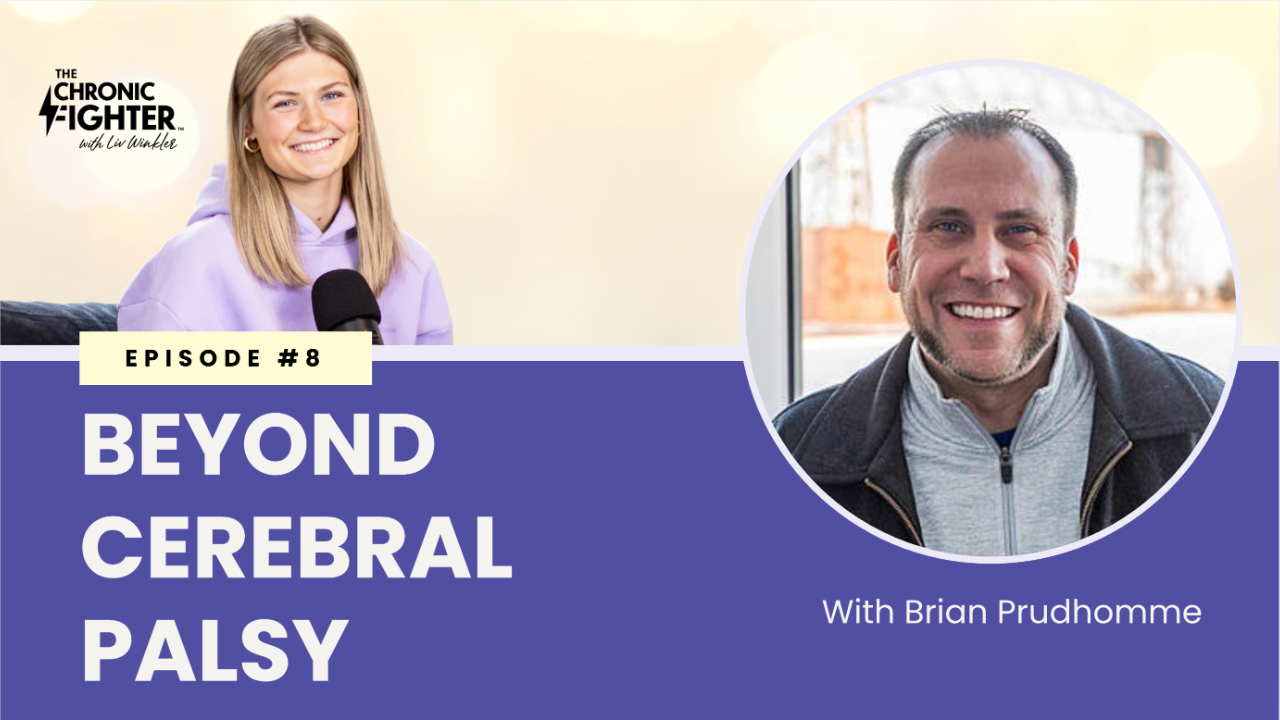
In Episode 8 of The Chronic Fighter Podcast, I sat down with Brian Prudhomme, someone I've looked up to for years. Brian was born with cerebral palsy and has spent his life finding ways to do the things he loves. His passion for sports led him to a career in sports broadcasting and public address announcing, including announcing some of my high school soccer games.
I've admired Brian for a long time, but this was the first time we'd sat down and talked about what living with a disability has been like for him. We talked about growing up with cerebral palsy, the role his family played in his life, accepting limitations, finding your strengths, and the difference between being inspired by someone and feeling sorry for them.
And Brian brought plenty of humor to the conversation, which made it even more fun!
Growing Up With a Disability Without Being Defined by It
Brian has lived with cerebral palsy for as long as he can remember. His disability affects his lower-body strength, balance, and mobility. He used a walker as a child, has walked without assistance during parts of his life, and now uses two canes. Everyday activities like navigating stairs, getting into vehicles, or finding an accessible shower can require planning and adjustments.
But when I asked Brian about growing up with cerebral palsy, one of the first things he talked about was his parents. He credits them with making sure his childhood wasn't completely centered around his disability. His dad took him to Minnesota Twins games, sometimes carrying him up the stairs at the Metrodome so he could sit in the upper deck and enjoy the game.
At the same time, Brian wasn't excused from the normal expectations of being a kid. He got in trouble for not doing his homework or coming home late, just like everyone else. His parents understood that he needed certain accommodations, but they didn't want cerebral palsy to become the most important thing about him. That really resonated with me because my parents took a similar approach.
Growing up with chronic illness, my parents made a point of treating me the same as my brother. When I showed up to family gatherings during a flare, I wasn't treated like someone who needed everyone's attention. I was just Liv.
Brian and I talked about how important that was for both of us. We needed support and sometimes different accommodations, but we also wanted the chance to grow up, make mistakes, have friendships, and experience the same things as everyone else.
Accepting Your Limitations Isn't the Same as Giving Up
One of my favorite parts of our conversation was when I asked Brian what he thought the difference was between accepting your disability and giving up on yourself.
To him, they're completely different things.
Acceptance means recognizing an obstacle and figuring out what you can do about it. Giving up means allowing that obstacle to stop you from trying altogether.
Brian gave an example from his childhood.
He loved playing softball, and he could hit the ball. But running the bases was a different story. Even when he hit the ball well, he often couldn't make it to first base before being thrown out. Eventually, they found a solution. Brian would bat, and another player would run the bases for him. He still got to participate in the part of the game he could do, without pretending that his mobility limitations didn't exist.
I loved this example because I think it's something people living with chronic illness can relate to. There have been times when I've had to make adjustments to continue playing sports, spending time with friends, or pursuing things I cared about. And sometimes I've had to accept that certain activities weren't realistic for me anymore. That can be really difficult, especially when you're comparing yourself to what you used to be able to do. But accepting that something needs to change doesn't necessarily mean giving up on the goal itself.
Sometimes you just have to figure out another way to get there.
Finding a Different Way to Do What You Love
Sports have always been one of Brian's biggest passions. As a kid, he loved watching games and learning everything he could about different teams and athletes. But because of his cerebral palsy, he realized pretty early on that he wasn't going to have the same opportunities to play sports as other kids.
Instead, he started thinking about other ways he could be involved.
He realized he loved talking almost as much as he loved sports. When he was around seven years old, he would turn down the volume on sports video games and record himself doing play-by-play commentary. He still has some of those old cassette recordings.
Years later, that childhood interest became part of his career. Brian has spent approximately 20 years involved in Minnesota sports broadcasting and public address announcing. He also found ways to stay involved with athletics while he was in school, including serving as a student manager. I think his story is such a good example of how our strengths, along with the limitations we may have, can lead us in directions we might not have considered originally.
During our conversation, I brought up a TED Talk called Embrace the Shake, by artist Phil Hansen. Phil developed nerve damage that caused his hand to shake, making it difficult to create art the way he had before. Instead of abandoning art, he started experimenting with other ways to create it. The idea that limitations can lead to creativity has stuck with me ever since I first heard that talk in college.
And listening to Brian talk about his broadcasting career reminded me of it. He didn't stop loving sports because he couldn't participate in every aspect of them. He found something else he was good at that allowed him to remain part of the world he loved.
The Everyday Adjustments People Don't Always See
One thing Brian helped me think about differently was how much creativity can go into ordinary activities. We usually think of creativity as something artistic or impressive. But when you're living with a disability or chronic illness, sometimes being creative means figuring out how to get through your day.
Brian talked about needing to consider things that other people might never think twice about.
Can he get into someone's vehicle?
Are there stairs?
Is the shower accessible?
How much time will he need to get from one place to another?
Even coming down the stairs to record our podcast required him to think about how he was going to do it safely. Brian joked that it might not be fast or pretty, but he was going to get there.
I think people living with chronic illness understand this in their own ways. Maybe you have to plan your activities around when you have the most energy. Maybe you need to bring your own food, find somewhere to rest, or make sure you can leave early if your symptoms become too much.
Sometimes the adjustments are small. Other times, they determine whether you can participate in something at all. And what works for one person might not work for someone else. Brian's experience reminded me that there's a lot of problem-solving happening behind the scenes that other people never see.
When You Worry About Being a Burden
Something else Brian and I connected on was the fear of making life more difficult for the people around us.
Brian doesn't drive. He explained that cerebral palsy played a role in that, but anxiety around driving was also a major factor. It's something he still has complicated feelings about, especially because it affects his independence.
He talked about looking for a house with his wife and knowing that accessibility would influence which homes they could consider. Even though he knows his wife doesn't see him as a burden, he admitted that the thought sometimes crosses his mind.
I understood exactly what he meant. I've had similar feelings when my health or food restrictions have affected plans with friends. Sometimes I worry that everyone has to change what they're doing because of me. But when I've talked with my friends about it, I've realized they usually aren't thinking about those things the way I am.
Brian made an interesting point about how we sometimes assume other people see us the same way we see ourselves. We might be focused on the accommodations we need, while our friends are just happy to spend time with us.
That doesn't mean those feelings disappear overnight. But it can help to remember that the people who care about us aren't necessarily keeping track of every adjustment they make. They just want us to be part of their lives.
You Don't Have to Participate in Everything to Be Included
Brian shared a story about a field trip his elementary school class took to a roller rink. Because he couldn't roller skate, he was allowed to spend his time playing video games instead. And he was pretty sure his classmates were jealous.
He also talked about friendships where certain activities, like running, weren't something he could participate in. Instead of expecting his friends to stop doing those things, he'd find other opportunities to spend time with them. Maybe they couldn't go running together, but they could watch a movie or play video games afterward.
That reminded me of college. My friends would sometimes go out for late-night treats at places where I couldn't eat anything because of my dietary restrictions. But I could still ride along, sing in the car, and spend time with everyone. I didn't have to eat the same food to enjoy being there.
I think it's easy to feel like you're missing out when you can't participate in something the same way everyone else does. And sometimes you really are missing out. That can hurt. But there are also times when being part of the experience matters more than doing every single activity. I've had to learn that for myself, and I loved hearing how Brian has approached it throughout his life.
Finding Your Strengths and Letting Other People Help
Another part of Brian's story that stood out to me was how he approaches his work in broadcasting. People usually think about the announcer behind the microphone, describing the game and keeping up with everything happening on the field, court, or ice. But there's a lot more that goes into a broadcast.
Equipment needs to be transported, set up, and taken down. Because of his mobility limitations, Brian can't do all of those physical tasks himself. He admitted that sometimes he feels bad about leaving that work to his broadcasting partner, who's also on the radio with him.
But they've figured out a system that works for both of them. His partner takes care of lifting and setting up the equipment, while Brian handles other important responsibilities, like arranging guests and finding sponsors. And of course, they're both involved in the actual broadcasting.
What I liked about this part of our conversation was how they've learned to work together by recognizing what each person brings to the table.
We talked about how everyone has different strengths, whether they have a disability or not. Brian might need help with the physical side of broadcasting, but he contributes in plenty of other ways.
I think that's important to point out. Needing help with certain tasks doesn't mean you're contributing any less. It just means you might have to figure out a different way to divide up the work.
When Being Called Inspirational Doesn't Feel Like a Compliment
One of the most interesting parts of our conversation was something I hadn't really thought about before. I've looked up to Brian for years. Seeing how he's built a career around something he loves, maintained friendships, and stayed involved in his community has always impressed me. But Brian has complicated feelings about being called inspirational.
He told me about being at a festival in Duluth when a couple of strangers approached him and complimented him simply for being there. They could see that getting around wasn't easy for him, and they apparently thought it was impressive that he'd come out to enjoy the festival.
But Brian wondered what exactly they were congratulating him for. He was just spending time with his friends. It made him question the difference between someone genuinely admiring what he's accomplished and someone feeling sorry for him because he has a disability.
I thought that was such an interesting perspective. Because I do find Brian inspiring. But it isn't because he has cerebral palsy and goes out into the world. It's because of who he is, what he's worked toward, and the way he's chosen to live his life.
And I think that's what he wanted people to understand. He doesn't want to be admired just for doing ordinary things while disabled. He wants people to recognize the things he's actually worked hard to accomplish. That conversation made me think more carefully about how we talk about people living with disabilities and chronic illness.
Being Proud of the Little Wins
Toward the end of our conversation, Brian talked about the importance of taking care of your health and recognizing when your body needs something different. He also brought up the idea of having goals that you might not be able to accomplish yet. Instead of immediately deciding they're impossible, he suggested thinking about what steps might help you get closer to them.
That led us into a conversation about being proud of small accomplishments. I told Brian that I think this is something people living with chronic illness often struggle with. It's easy to focus on how far you still have to go rather than recognizing what you've already done.
And sometimes what feels like a small accomplishment to someone else requires an enormous amount of effort from you. Brian admitted that he could get better at recognizing those moments in his own life. I appreciated that because, even after everything he's accomplished, he's still learning too. None of us has everything figured out.
Being Known for Who You Are
At the end of the episode, I asked Brian what he's most proud of. I loved his answer. He talked about being an uncle to his two nieces, being a husband, being a good friend, and building a career as an announcer. And he talked about being proud that people know him for those things rather than only knowing him as someone with cerebral palsy.
His disability has been part of his life since childhood. It's influenced countless decisions, activities, and experiences. But when Brian thinks about who he is, there are so many other things that come to mind. I think that's one of the biggest reasons I've always looked up to him.
He's not trying to pretend his disability doesn't exist. He's open about the challenges and adjustments that come with it. But he also has a lot of other things he wants to talk about, people he cares about, and goals he's excited to pursue. That's something I've wanted for myself throughout my experience with chronic illness.
I don't want my diagnoses to be the only things people know about me. I want people to know me as Liv. And after sitting down with Brian, I was reminded of how much we can learn from people whose health experiences look completely different from our own.
And if this conversation resonates with you, subscribe to The Chronic Fighter for honest conversations, practical strategies, and stories about navigating chronic illness while continuing to build a life that feels meaningful to you.
Feel Free to Reach Out
Questions about the membership, the podcast, collaborations, or something else?
We would love to hear from you.
Use the form below and we’ll get back to you as soon as we can.
We hate SPAM. We will never sell your information, for any reason.
